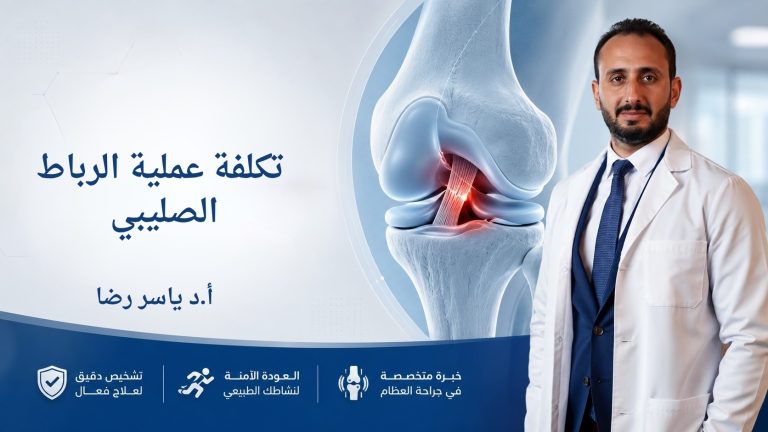

Arthroscopic ACL surgery is one of the most common surgical procedures used to treat ACL injuries, particularly in athletes or people who sustain a direct knee injury during sport or sudden movement. This is because the knee is one of the areas of the body most prone to injury: it bears the body's weight and is involved in movement, walking, running and changes of direction. Therefore, A guide to knee surgery and diagnosing joint problems helps explain common knee injuries and how they are assessed.
The knee contains four main ligaments that help stabilise the joint and protect it during movement. Among the most important are the anterior cruciate ligament and posterior cruciate ligament. The ACL anterior ligament is one of the ligaments most prone to injury because it connects the thigh bone to the shin bone and helps stabilise the knee during movement and rotation.
In the following sections, we discuss arthroscopic ACL surgery, starting with what the procedure involves, the causes of injury and the symptoms patients experience, followed by the surgical steps, the benefits of arthroscopy and recovery after surgery.
What is arthroscopic ACL surgery?
Arthroscopic ACL surgery is a minimally invasive surgical procedure performed through small incisions around the knee. The surgeon uses a tiny camera and special surgical instruments to view the inside of the knee joint and reconstruct or treat the injured ACL according to the patient's condition.
The term “arthroscopic” does not mean the procedure is non-surgical. It means it is less invasive than traditional open surgery. The small camera provides clear images of the tissues, ligaments and cartilage inside the knee, helping the surgeon locate the injury and treat it precisely.
In most complete ACL tears, the injured ligament is not simply stitched together. Instead, it is reconstructed using replacement tissue taken from the patient's own body or another suitable source, based on the surgeon's assessment. This tissue is secured in place to perform the function of the ACL and help the knee gradually regain stability.
The procedure is performed using Knee Arthroscopy, a procedure that allows the surgeon to view the inside of the joint through small incisions instead of a large open operation.

Causes of ACL problems
Many factors can cause a partial tear or an ACL tear, and this injury is common among athletes, but it may also result from accidents or sudden twisting of the knee.
The main causes of ACL injury include:
- A direct injury to the knee during sport.
- Falling from a height or being involved in a car accident that affects the knee joint.
- Suddenly changing direction while running or playing.
- Twisting or rotating the knee incorrectly while trying to stop suddenly.
- Weakness in the muscles around the knee, which reduces joint stability.
- Neglecting repeated knee injuries or returning to sport before recovery is complete.
Symptoms of ACL injury
ACL injury symptoms vary between patients depending on the severity of the injury and the extent of the tear. However, the main aim of ACL treatment is to restore knee joint stability, reduce pain and help the patient move more easily.
The most common symptoms include:
- Being unable to carry out daily activities normally.
- Difficulty moving or a feeling of instability when walking.
- Hearing a popping or cracking sound at the time of injury.
- Knee swelling within hours of the injury.
- Severe knee pain after the injury.
- A feeling that the joint is unstable or that the knee “gives way” during movement.
- Pain when walking or standing for long periods.
If symptoms such as knee swelling, severe pain or joint instability develop after a sports injury or sudden twisting, it is best to see a specialist orthopedic doctor as soon as possible for an assessment, rather than waiting for symptoms to worsen.

When does a patient need arthroscopic ACL surgery?
Not every ACL tear requires immediate surgery. The decision depends on the severity of the injury, the patient's age and activity level, associated cartilage or ligament injuries, and how much the injury affects knee stability.
The doctor may recommend surgery in the following cases:
- A complete ACL tear with clear knee instability.
- A repeated feeling that the knee is unstable when walking or running.
- A wish to return to sport or high levels of physical activity.
- Associated injuries such as meniscus tears or other injuries inside the joint.
- Failure of physiotherapy to improve knee stability in cases suitable for surgery.
Steps of arthroscopic ACL surgery
Arthroscopic ACL surgery involves several stages and requires precision and experience from the surgeon to reconstruct the ligament appropriately for the condition of the knee. The general steps are:
- Preparing and anaesthetising the patient: Before surgery, the doctor requests tests and examinations to check that the patient is medically fit for the procedure. The appropriate type of anaesthesia is then selected according to the case.
- Making small incisions and inserting the arthroscope: After anaesthesia, the surgeon makes small incisions around the knee to insert the arthroscope and fine surgical instruments.
- Examining the inside of the knee joint: The arthroscope allows the surgeon to clearly view the torn ligament, cartilage and other parts of the joint.
- ACL reconstruction: In a complete tear, suitable replacement tissue is used to form a new ligament and secure it in place.
- Treating associated injuries: If the meniscus or another structure inside the joint is injured, it may be treated during the same operation, depending on the case.
- Closing the incisions: After surgery, the small incisions are closed with a few stitches and covered with an appropriate dressing.
- Duration of surgery: The duration of surgery varies depending on the patient's condition and any associated injuries, but it generally takes a limited time compared with traditional open surgery.
How Long Does ACL Reconstruction Take?
ACL reconstruction usually takes between one and a half and two hours, but Prof. Dr. Yasser Reda, an ACL reconstruction expert, performs it in 40 minutes because of his extensive experience. It has a success rate exceeding 98% across more than 1993 procedures.
These statistics demonstrate that Prof. Dr. Yasser Reda is the best ACL reconstruction doctor using the anatomical technique, which relies on knee arthroscopy, making a small opening of approximately 5 mm around the injured knee joint to insert a tiny camera and fine ACL reconstruction instruments. The benefits of knee arthroscopy include helping the surgeon view the joint and treat the injury through small openings. The operation has two methods: replacing the ACL and implanting a new ligament, or securing and suturing it when there is an avulsion with a bone fragment that may heal. The most suitable option is selected after discussion with the specialist treating doctor. The patient can return home on the same day, resume normal life after 10 days, return to office work after two weeks and drive after 3 weeks.
Latest Anatomical ACL Reconstruction
This is currently the newest type of ACL reconstruction and is agreed upon by the Global Sports Injuries Association, but it is the most technically difficult. Only the damaged ACL is removed while its origin on the shin bone is preserved. This method has been scientifically proven to be best for athletes' movement. A new ligament is then prepared and usually transferred from another site in the patient's knee or from the ankle. The posterior knee hamstring tendon is commonly used because its strength and length allow a quadruple graft with strength above 4000 newtons, twice that of the patient's original ACL.
Parts of tendons from other donors may be used, but this technique is not performed in Egypt or the Arab world because it causes infection at unacceptable rates. Tissue from the patient's own body is preferred to avoid rejection of the implanted tendons or infection.
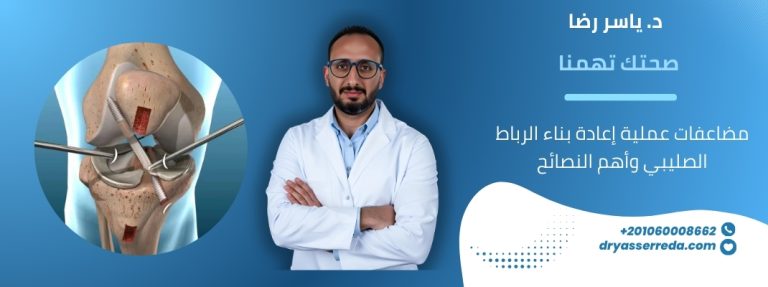
After the new tendon graft is implanted, it is secured with bone screws between the thigh bone and shin bone in the position of the old ACL. The tendon begins to integrate with the body's cells and receives nourishment through newly growing blood vessels.
ACL Repair Surgery
This modern technique first appeared in 2014, but its success rates are very low and it cannot be relied upon as a general treatment. The torn ligament is secured with artificial supports that stabilize it until treatment is complete and the ACL heals. The supports mimic ACL function and maintain its mechanical stability inside the knee joint.
The torn ends of the ACL begin to heal after suturing, joining together and recovering. This procedure is often adopted and preferred because it preserves all ACL nerves, unlike reconstruction, in which the implanted tissue does not carry the nerves of the old ACL.
However, the modern anatomical technique avoids this issue by preserving part of the ACL's origin on the shin bone to maintain nerve cells and accelerate rehabilitation. Patients undergoing Prof. Dr. Yasser Reda's special anatomical technique gain better control of knee movement directions than those undergoing the old non-anatomical or conventional anatomical method. Prof. Dr. Yasser Reda is the best orthopedic doctor for the latest anatomical ACL reconstruction and the only expert in it in Egypt and the Middle East, making it the preferred operation for athletes.
Benefits of arthroscopic ACL surgery
Before advances in technology and modern medical techniques, knee surgery involved more invasive approaches. Arthroscopy in ACL surgery has become a method that helps improve diagnostic and treatment accuracy and reduce the size of surgical incisions.
The Benefits of knee arthroscopy are clear in certain knee injuries that require a precise view inside the joint. The main benefits of arthroscopy in ACL surgery include:
- Providing a clear view of the inside of the joint.
- Performing the operation through small incisions instead of a large open operation.
- Reducing pain and swelling after surgery compared with some traditional methods.
- Helping treat certain associated injuries inside the knee during the same procedure.
- Improving the precision of fixation of the new ligament according to the patient's condition.
- A gradual return to movement with an appropriate rehabilitation programme.
Although arthroscopy helps reduce the extent of surgical intervention, ACL surgery still requires full commitment to rehabilitation and physiotherapy after the operation.

Risks and complications of arthroscopic ACL surgery
Despite the many benefits and advantages of arthroscopic ACL surgery, some complications may affect certain patients but not others. These include:
- The patient may develop an infection after surgery, but it is not as serious as some people believe, as it is treated within a short time and over time.
- Knee swelling may occur after surgery. It is mild and accompanied by slight pain, but all of this subsides and disappears with ice packs and rest.
- The patient may experience knee stiffness due to a period of immobility, which can be relieved through physiotherapy exercises.
For more details, read: ACL Reconstruction Complications.
Before ACL Reconstruction
Although waiting two to three weeks before surgery is necessary in many cases, it may weaken knee movement and the quadriceps. Physiotherapy is often recommended to prepare the knee before surgery.
Before surgery, the doctor confirms that the patient can move at least slightly without pain and performs exercises to strengthen the thigh muscles and hamstrings. This prepares for recovery and the postoperative stage. Wounds, scratches and blisters below the knee may delay surgery until they heal because of infection risk.
Recovery steps after arthroscopic ACL surgery
Recovery time after ACL surgery varies between patients depending on the type of injury, muscle strength, commitment to physiotherapy and associated injuries inside the knee.
Before discussing the instructions and guidance patients should follow after arthroscopic ACL surgery, it is important to understand that recovery and a return to normal life or sport take time.
The main steps in recovery after surgery include:
- Rest and reducing swelling: After surgery, adequate rest and ice packs used according to the doctor's instructions are recommended to reduce pain and swelling.
- Using a crutch or brace: The patient may need walking aids or a knee brace during the initial period, depending on the doctor's assessment.
- Physiotherapy: Physiotherapy begins at the time specified by the doctor and aims to restore movement and strengthen the muscles around the knee.
- Returning to daily activities: As movement and strength improve, the patient gradually returns to light daily activities without placing excessive strain on the knee.
- Returning to sport: Returning to sport requires a complete rehabilitation programme and the doctor's approval, because returning too early may injure the new ligament.
For suitable exercises, read: Exercises After ACL Surgery.
Tips After Arthroscopic ACL Surgery
To recover quickly after ACL surgery, patients should follow all the advice provided by their doctor after the procedure. This advice aims to reduce rare complications and includes:
- Take the medications prescribed by the doctor at their scheduled times.
- Eat balanced, healthy meals to maintain a healthy weight and reduce pressure on the knee.
- Using a bandage around the knee is recommended to reduce swelling.
- When sleeping, raising the leg on a pillow is recommended to help blood flow to it.
- Observe the period of rest specified by the doctor.
- Avoid strenuous activities during recovery.
- Follow the rehabilitation program recommended by the doctor.
For more advice, read: Key Tips After ACL Surgery.
How Is the Knee Bent After ACL Surgery?
The knee is bent gradually immediately after ACL reconstruction through gentle rehabilitation exercises that help restore flexion. During the first week, the doctor asks the patient to perform light exercises that bend the knee to an angle of °60-90°. This should reach 90° in the second week, and the knee joint is expected to regain full flexion over 6 weeks to three months.
More than 95% of ACL reconstruction procedures are successful, after which the patient resumes normal daily activities with a strong, healthy knee, provided that the procedure is performed by an experienced specialist. You can now book ACL reconstruction at Prof. Dr. Yasser Reda’s center, “knee orthopedic specialist”.
More than 90% of ACL reconstruction procedures are successful, after which the patient resumes normal daily activities with a strong, healthy knee, provided the procedure is performed by an experienced specialist. You can now book ACL reconstruction at Prof. Dr. Yasser Reda’s center ” Prof. Dr. Yasser Reda “.
Why choose Prof. Dr. Yasser Reda for arthroscopic ACL surgery?
Arthroscopic ACL surgery, or ACL arthroscopy, requires an accurate diagnosis and experience in knee and sports injuries. The decision to operate depends not only on the presence of a ligament tear but also on the degree of instability, the patient's activity level and other injuries, such as a meniscus tear.
Prof. Dr. Yasser Reda provides specialist assessment of ACL injuries, beginning with a clinical examination and a review of X-rays and MRI scans, then determining whether non-surgical (conservative) treatment and rehabilitation are appropriate or arthroscopic ACL reconstruction is needed.
The The cost of ACL surgery also vary according to the patient's condition, the type of injury, associated injuries inside the knee and the technique used. They are determined precisely after examination and review of the tests.
He also focuses on developing an appropriate treatment and rehabilitation plan for each patient. Surgical success depends not only on the operation but also on commitment to physiotherapy and postoperative follow-up until knee movement and stability improve.
If you are looking for a comprehensive assessment of your knee or a sports injury, follow-up with the Knee Orthopedic Specialist helps identify the cause of joint instability and select an appropriate treatment plan.

When should you see a doctor after an ACL injury?
Seeing a specialist orthopedic doctor is recommended if a knee injury is followed by severe pain, swelling or joint instability. Early diagnosis helps select appropriate treatment and avoid repeated injury or further damage inside the joint.
You should see a doctor particularly in the following cases:
- Knee swelling immediately after an injury or within hours.
- Being unable to walk normally.
- A feeling that the knee is unstable or gives way during movement.
- Severe pain that prevents the patient from carrying out daily activities.
- A sports injury accompanied by a popping sound or clear twisting of the knee.
Related Topics: ACL
If you have an ACL injury or are preparing for surgery, these articles provide more information:
- Difference Between an ACL Tear and Rupture: how doctors distinguish between them and whether treatment differs.
- Partial ACL Tear: the latest treatment methods.
- ACL tear treatment: treatment depends on the type of tear, partial or complete.
- ACL Injury Treatment: when physical therapy is enough and when surgery may be needed.
- Best ACL Reconstruction Methods: a comparison of the traditional and anatomical techniques.
- Types of Tendon Grafts: differences between the types and how the choice is made.
- Tendon Graft Fixation Techniques: screws, buttons and fixation devices.
- Knee Appearance After ACL Surgery: what to expect and key advice after surgery.
- Rehabilitation exercises after ACL surgery: a step-by-step exercise program.
- best ACL specialist: Prof. Dr. Yasser Reda's experience in ACL surgery.
Frequently asked questions about arthroscopic ACL surgery
Is arthroscopic ACL surgery a minor procedure?
When does a patient with an ACL tear need surgery?
How long does arthroscopic ACL surgery take?
When can you start walking after ACL surgery?
For more details, read about walking after ACL reconstruction surgery.
Can patients return to sport after ACL surgery?
Can an ACL tear be treated without surgery?
This concludes our article on arthroscopic ACL surgery, covering the causes of injury, symptoms of an ACL tear, surgical steps, the benefits of arthroscopy, and recovery. If you have knee pain, swelling, or instability after a sports injury, you can book an appointment to see Prof. Dr. Yasser Reda for an assessment of your condition and the most appropriate treatment plan.