

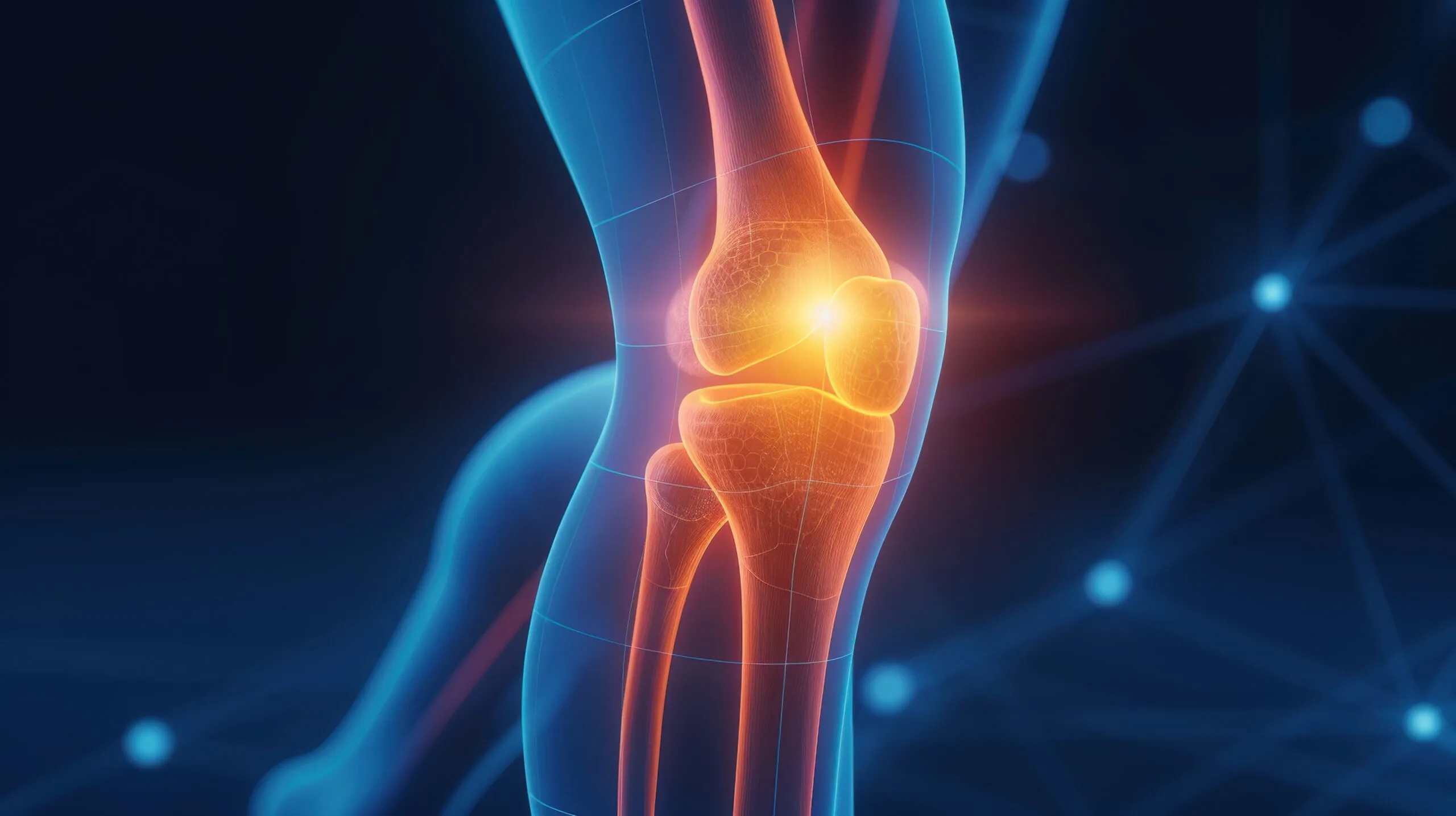
Many injured people look for natural ways to treat the anterior cruciate ligament without surgery. Most important is consulting the best ACL specialist to treat this injury effectively using modern devices that support healing. An anterior cruciate ligament tear is a common knee injury. The anterior and posterior cruciate ligaments are two ligaments in the knee that connect the shinbone to the thighbone.
Cruciate ligament injuries are especially common among athletes such as soccer and basketball players and martial arts practitioners. Nonathletes may also be injured in accidents such as tripping. This article reviews natural nonsurgical treatments for the anterior cruciate ligament with Prof. Dr. Yasser Reda, Professor of Orthopedic Surgery and Arthroscopy and a doctor experienced in sports injuries.
Grades of Anterior Cruciate Ligament Tears

To determine whether an anterior cruciate ligament tear should be treated without surgery or surgically, the doctor first identifies the grade of the tear. It can be divided into three grades:
- Grade One: The cruciate ligament is stretched but still performs its function. This is a mild condition.
- Grade Two: The cruciate ligament is stretched and loose, also known as a partial cruciate ligament tear.
- Grade Three: A complete cruciate ligament tear, the most serious grade of injury.
In general, treatment of ACL injuries falls into two categories: surgical and nonsurgical treatment. The choice varies according to each patient’s condition and needs. A young athlete needs treatment that restores normal knee movement and the same strength present before injury, so surgery is the most appropriate option. For an older patient who does not need strenuous activity, surgery is not necessary. The patient can reduce daily activity and adapt to the injury.
How Is ACL Surgery Performed?

How Is ACL Surgeryperformed? ACL surgery is particularly important for people whose work depends on activity and movement, such as athletes.
Natural Nonsurgical Treatments for the Anterior Cruciate Ligament

Natural nonsurgical treatment of the anterior cruciate ligament requires exercises for the tear. During the initial stage, Prof. Dr. Yasser Reda recommends a brace to protect the knee from instability. The patient may also use crutches to reduce pressure on the knee. Specific exercises include:
- Heel Slides: Extend the knee without bearing weight. Sit on the floor with both legs extended, then slowly bend the injured knee while sliding the heel along the floor toward the body. Slowly return the foot to the starting position. Repeat this exercise 10 times.
- Quadriceps Contractions: Perform quadriceps contractions while seated. Sit on the floor with the injured leg extended and the other leg bent. Slowly tighten the quadriceps of the injured knee without moving the leg, hold for 10 seconds, then rest. Repeat 10 times.
- Knee Flexion: First lie on your stomach with both legs extended. Bend the injured knee and bring the heel toward the buttocks. Contract the muscles in this position for 5 seconds, then relax and repeat 10 times. The patient may feel pain during these exercises, but over time, once the knee swelling subsides, they can perform a range of exercises, including:
- Knee Extension: Place the knee between two chairs of equal height facing each other at a distance slightly shorter than the length of the leg. Sit on one chair and place the heel on the other, allowing the leg to relax and the knee to straighten. Remain in this position for one to two minutes several times a day to stretch the hamstrings gradually.
- Heel Slides: While standing, raise the heel and place one hand on the back of a chair for balance. Slowly raise the heel of the injured leg and stand on the toes for 5 to 10 seconds, then slowly lower both heels. Repeat this exercise 10 times.
- Half Squat: Perform a half squat while standing and holding a sturdy table. Place the feet shoulder-width apart, slowly bend the knees, and lower the hips into a half-squat position. Hold for 10 seconds, slowly return to standing, and repeat 10 times.
- Knee Extensions: Knee extensions require an exercise band. Wrap one end around a table leg and the other around the ankle of the injured leg. Then secure both ends around the table leg and place the ankle of the injured leg through the loop opposite the band. Slowly bend the knee to 45 degrees against the table leg's resistance. Hold for a few seconds, slowly return to standing, and repeat 10 times.
- Standing on One Leg: Standing on one leg effectively strengthens and assesses the patient's strength and balance. Begin by standing on both feet, then lift the healthy leg and remain standing unassisted on the injured leg for 10 seconds.
This exercise is very difficult at first, but with time and patience, the patient will be able to perform it within several weeks. Patience is an important part of recovery from any health problem and helps you return to a normal lifestyle, especially during ACL treatment.
What Is the Difference Between Surgery and Physiotherapy?
First: Physiotherapy (Non-Surgical Treatment)
Physiotherapy is a suitable option in the following cases:
- The injury is partial.
- The patient does not participate in high-impact sports or has limited daily activities.
- The patient is older or has health problems that prevent surgery.
Components of physiotherapy:
- Quadriceps and hamstring strengthening exercises to stabilize the knee.
- Exercises to improve balance and joint control.
- Training the patient in safe movement patterns.
- Electrical therapy or ultrasound sessions to reduce inflammation.
Advantages of physiotherapy:
- Avoiding the risks of surgery and anesthesia.
- Gradual recovery with improved muscle control.
- Lower cost compared with surgery.
Disadvantages of physiotherapy:
- It is unsuitable for severe cases or athletes.
- The injury may recur if the underlying cause is not treated.
- A persistent feeling of joint instability.
Second: Surgery (Ligament Reconstruction)
Surgery is performed for complete tears, if the patient is a professional athlete or if physiotherapy fails. The surgical steps are:
- It is performed using arthroscopy.
- The damaged part of the ligament is removed.
- The ligament is reconstructed using a tendon from the patient's own body, such as the patellar tendon or hamstring tendon, or tissue from a donor.
Recovery period after surgery:
- Complete rest for the first two weeks.
- Starting physiotherapy after two weeks to strengthen the muscles.
- Gradually returning to activities within 6 to 9 months.
- A full return to sports may take 9-12 months, depending on the body's response.
Advantages of surgery:
- Substantially restoring knee stability.
- Reducing the risk of recurrent injury.
- Enabling the patient to return to sports or intensive activities.
Disadvantages of surgery:
- Possible complications (infection, blood clots, joint stiffness).
- Higher cost.
- A relatively longer recovery period.
- The need for strict adherence to postoperative rehabilitation.

How Do You Choose Between Surgery and Physiotherapy?
The treatment decision depends on several factors, including:
- Severity of the injury: A complete tear often requires surgery.
- Patient age: Surgery is often preferred for younger patients or athletes.
- Daily activity level: Surgery is recommended for highly active people.
- Desire to return to sports: Surgery provides a greater opportunity to return to the previous performance level.
- General health: Some chronic diseases may make surgery risky.
Causes of Anterior Cruciate Ligament Tears

Knee injury is among the causes of anterior cruciate ligament tears. This ligament resists abnormal forward movement and assists with leg rotation. Athletes in basketball, soccer, hockey, skiing, and gymnastics may be injured because these sports require sudden movements that place pressure on the knee. The common causes of anterior cruciate ligament tears include:
- Suddenly slowing down while changing direction or stopping.
- Severe twisting on a planted foot.
- Landing incorrectly after a jump.
Risk factors for anterior cruciate ligament tears include:
Several factors increase the risk of an ACL tear. Women are more susceptible because of muscle training, control, and leg strength. Sports such as basketball, soccer, volleyball, skiing, hockey, and tennis place pressure on the knees through rapid movements that may cause sudden injuries such as twisting. People aged 15 to 45 often experience tears because of active lifestyles, including sports. A previous ACL tear also increases the risk of another.
Treatment Time for an ACL Tear
Anterior cruciate ligament tears are common among athletes and may also result from traffic accidents or severe falls. This injury requires precise medical care and a long-term rehabilitation program. The Treatment Time for an ACL Tear varies according to several factors, mainly tear severity, whether treatment is surgical or nonsurgical, the patient’s general health, and adherence to rehabilitation. Mild cases that do not require surgery may take 3 to 6 months to recover, including rest, strengthening the muscles around the knee, and improving balance. Complete tears requiring surgery often need 9 months or more, and recovery may take a full year before the patient returns to their normal level of movement, particularly for professional athletes.
Physical therapy begins immediately after ACL reconstruction and is the most important stage in restoring knee function. During the first weeks, rehabilitation focuses on reducing swelling, restoring the joint's normal range of motion, and strengthening muscles without excessive loading. Advanced stages include balance work, strengthening the thigh and leg muscles, and movement retraining suited to the patient's lifestyle. Doctors stress that returning to physical activity before completing every rehabilitation stage raises the risk of reinjury, so following the program is crucial to treatment success. Treatment duration depends on both the number of months and the quality of adherence to physical therapy and the knee's response.
When Is Treatment Without Surgery an Option?
The decision to undergo or avoid ACL repair surgery is not made randomly. In some cases, symptoms can be controlled and joint function improved without surgery. The main cases include:
- Partial tears in which the ligament has not completely lost its function.
- Patients who do not play strenuous sports or perform activities requiring sudden changes of direction.
- The knee retains an acceptable degree of stability.
- Older adults or people with health problems that make surgery risky.
In these situations, doctors use alternative treatment paths that can achieve excellent results, especially when the case is supervised by the best orthopedic consultant, known for designing a personalized treatment plan without exaggeration or recklessness in decision-making.
Available Non-Surgical Treatment Options
1. Rehabilitation and Movement Therapy
Physiotherapy is the foundation of any attempt to treat an ACL tear without surgery. It includes precise, gradually performed exercises to strengthen the thigh and hamstring muscles, improve balance and increase joint stability. The program should begin after a short initial rest period to reduce swelling. Results are not immediate, but they can be remarkable with full adherence, and many patients have regained their normal lifestyle without entering the operating room.
2. Medical Braces (Knee Support)
Braces reduce joint movement and protect it from twisting while walking or standing. They are particularly useful for partial tears or during rehabilitation. The brace type is selected according to injury severity and the specialist doctor's evaluation.
3. Medication
The doctor prescribes medication to control pain and inflammation, but it does not treat the problem itself. The main medications used include:
- Anti-inflammatory medications such as ibuprofen or diclofenac.
- Mild pain relievers.
- Joint supplements such as glucosamine to strengthen cartilage and provide natural support for the joint.
4. Platelet-Rich Plasma (PRP) Treatment
This is a modern method that has proven effective. Natural substances extracted from the patient's own blood are injected into the injured area to accelerate repair. This treatment is usually used for uncomplicated cases under close supervision.
5. Lifestyle and Monitored Rest
The importance of rest cannot be overlooked, especially during the early stages after injury. The patient is asked to reduce physical activity and avoid repeatedly climbing stairs or standing for long periods. However, this does not mean complete rest, but intelligent, directed rest to prevent the knee muscles from deteriorating through inactivity.
Is Non-Surgical Treatment Suitable for Everyone?
No. Some injured people cannot benefit from non-surgical treatment, including:
- Professional athletes.
- People with a complete tear accompanied by clear knee instability.
- People who experience “joint looseness” while walking.
- Patients who do not improve despite intensive physiotherapy.
A comprehensive evaluation using an MRI and clinical examination is therefore essential. It is preferable for this to be supervised by the best orthopedic consultant, who can provide precise guidance and make the appropriate decision.
What Are the Advantages of Non-Surgical Treatment?
- Reduce costs and surgical risks.
- Avoid long recovery periods.
- Return to daily life more quickly.
- Preserve natural tissues and avoid introducing synthetic materials into the body.
When Does Surgery Become Necessary?
If symptoms persist despite treatment attempts or the injury is very severe, surgery may be unavoidable. In these cases, the ligament is reconstructed using a graft from the body or synthetic material. Even at this stage, proper planning and psychological and therapeutic preparation remain essential, as ensured by the best specialists, such as the best orthopedic consultant.
In conclusion, we have covered natural nonsurgical treatments for the anterior cruciate ligament with Prof. Dr. Yasser Reda, a pioneer in this field. Through extensive experience and an innovative scientific approach, he has changed many people's view of surgery by providing comprehensive rehabilitation programs based on precise exercises and natural techniques that have helped many patients heal and regain movement safely and effectively.