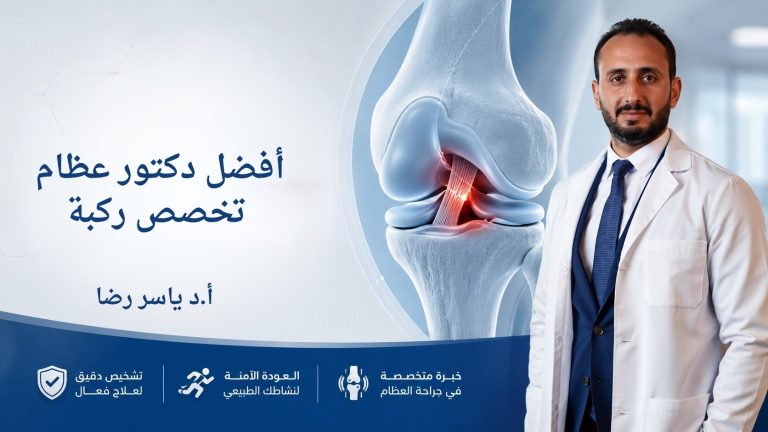

Can you live with a meniscus tear without surgery? This article with Prof. Dr. Yasser Reda explains. Meniscus tears are common injuries that affect mobility and cause troublesome pain that reduces quality of life. Advances in modern medicine have made it possible to treat many cases without surgery. These treatments rely on advanced medical techniques such as physiotherapy and local injections, allowing patients to improve their health and restore normal knee function. We will explore the main non-surgical treatments for knee cartilage and how to promote effective healing, including the possibility of living with a meniscus tear without surgery.
Treating a meniscus tear without surgery has become a promising alternative for people with severe knee pain. Do you remember the last time you woke up in the morning and sudden severe pain prevented you from getting out of bed, or an embarrassing moment when you could not climb stairs in front of others? You may now wonder whether a meniscus tear can heal without surgery and whether you can return to normal life, while worrying about an operation that may be expensive and painful. Modern medicine now offers effective solutions without surgery. In this article, we will take you through a comprehensive exploration of how to overcome knee cartilage pain and return to an active life.
What is the meniscus?

The meniscus is an essential component of the knee joint, consisting of two pieces of cartilaginous tissue between the thigh bone and shin bone. It has a crescent shape. These tissues protect the joint and facilitate movement by reducing friction between the thigh bone and shin bone.
The meniscus also plays an important role in distributing weight across the knee joint, improving the joint's ability to withstand shocks and external forces from activities such as walking and running. Each knee contains two menisci, one medial and one lateral, which act as cushions to ensure the joint surfaces fit together.
A meniscus tear is a condition affecting cartilage inside the knee joint and may restrict movement in some cases. It often occurs in athletes and can affect young people, adults and older people. Sports injuries are usually the cause in younger people, while ageing and declining tissue quality inside the joint may contribute in older adults.
Types of Knee Cartilage

Knee cartilage is flexible, fibrous tissue that acts as a protective cushion between the knee bones, helping distribute body weight and reduce friction during movement. There are two main types:
- Meniscus: It is C-shaped. Each knee contains two menisci, one medial and one lateral. They help absorb shocks and distribute weight evenly across the joint.
- Articular cartilage: It covers the inner surfaces of the bones in the joint, facilitating movement and preventing the bones from rubbing together.
A knee cartilage injury means damage or a tear in either type of cartilage. This usually results from sudden or forceful twisting of the knee joint, particularly while bearing body weight.
Meniscus tears are the most common cartilage injuries. They usually result from movements requiring sudden rotation or bending of the knee, such as sports involving abrupt twisting. Articular cartilage injuries are generally less common than meniscus tears and may involve small cracks, thinning or even holes in the cartilage. The knee is one of the most important joints in the body because it bears body weight and supports daily activity. However, this important area can develop various problems, including cartilage damage. This damage can cause severe pain and difficulty moving, significantly affecting quality of life.

Symptoms of a Meniscus Tear
The symptoms of a meniscus tear may vary from one patient to another according to the type, location, and size of the tear. Symptoms may appear immediately after injury or develop gradually over time. The most common symptoms include:
- Knee pain that increases with movement or twisting.
- Swelling or a feeling of fullness inside the knee joint.
- Difficulty fully bending or straightening the knee.
- Knee locking or a feeling that something is blocking movement.
- Clicking or an unusual sensation inside the joint.
- Pain when climbing stairs or squatting.
- Reduced ability to exercise or walk the usual distance.
Some symptoms of a meniscus tear may resemble symptoms of Knee Osteoarthritis Treatment, so a medical examination helps identify the true cause of knee pain.
Causes of a Meniscus Tear

A meniscus tear usually results from forceful bending or twisting of the knee. Excessive loading during movement, sudden stopping or forceful rotation may increase pressure on the meniscus, eventually causing it to tear. Causes include:
- Meniscus tears during sports activities: Meniscus tears usually occur during forceful movements with bent knees, as in skiing, football, basketball and other sports involving contact and considerable effort. Rapid acceleration or uncontrolled external forces can also cause this injury.
- Meniscus tears during work duties: Many jobs place a heavy burden on the menisci. Tasks that require squatting, such as paving and tiling, can place considerable pressure on them and may cause knee pain.
- Lifting heavy weights from a squat: Other causes involve lifting heavy weights from a squatting position. This method may reduce pressure on the back and spine but adds considerable pressure to the menisci, especially if the knee is already injured.
- Degenerative meniscus tears in older adults: Degenerative meniscus damage occurs in older adults as tissue wears over time. If the wear is advanced, a simple movement or slight pressure may be enough to cause a tear.
Younger patients may need a significant injury or impact to tear the meniscus. In older adults, a simple movement or slight stumble may cause symptoms if the cartilage is already damaged. ACL injuries can also increase pressure on the meniscus, so the patient may need assessment for associated knee injuries such as ACL Reconstruction when there is clear knee instability.
Diagnosing a Meniscus Tear
Diagnosing a meniscus tear does not depend on pain alone, because knee pain can also be caused by osteoarthritis, ligament injuries or tendinitis. That is why the doctor starts with a clinical examination and asks how the injury happened, then decides which tests are needed in each case. Read: Meniscus Surgery Success Rate.
- Examining the location of pain and the knee's range of motion.
- Assessing swelling, locking or difficulty straightening the knee.
- Establishing whether the injury followed twisting or a sports activity.
- Using plain X-rays when needed to assess bones and the degree of osteoarthritis.
- Requesting an MRI if symptoms persist or cartilage or ligament injury is suspected.
In cases of recurrent knee pain or multiple injuries inside the joint, A guide to knee surgery and diagnosing joint problems helps explain the most common causes of pain and how the condition is assessed.
How is knee cartilage treated?
We provide Knee Cartilage Treatment through the various available methods for treating knee cartilage, also known as the meniscus, from home measures to surgery. Prof. Dr. Yasser Reda selects the appropriate treatment based on factors such as the patient’s age, medical history, injury severity, ability to tolerate medications and treatments, expected healing time, and opinion of the treatment option. The main methods used to relieve knee cartilage symptoms include:
- Rest: This means stopping the physical activity associated with the injury and sometimes using crutches to reduce pressure on the knee until it heals.
- Ice: Apply ice packs or a bag of ice to the knee for 15 minutes several times a day to relieve pain and swelling, avoiding direct contact between ice and skin.
- Compression: Use an elastic bandage to compress the affected area, reduce swelling and support the knee.
- Elevation: Raise the knee above heart level using pillows to reduce swelling
- Medications: Some over-the-counter painkillers, such as paracetamol, and non-steroidal anti-inflammatory drugs, such as ibuprofen, may be used after consulting a doctor or pharmacist in cases of severe pain.
- Cortisone injections: The doctor may recommend cortisone injections for knee inflammation and swelling. These injections provide temporary pain relief but do not heal the cartilage tear.
- Physiotherapy: This begins with a physiotherapist's assessment, followed by an individual exercise programme to improve knee strength and stability. It also helps prepare the knee for surgery if needed.
- Surgery: In some cases, the doctor may recommend knee arthroscopy, in which a small camera is inserted to view the inside and repair damage. Reasons for surgery include pain that persists despite other treatments, limited knee movement or reducing the risk of future problems such as osteoarthritis.
Types of Surgery a Doctor May Recommend for a Meniscus Tear
Partial meniscectomy: Partial meniscectomy removes damaged meniscal tissue while preserving the healthy part. This procedure usually allows immediate weight-bearing and restores a full range of motion shortly after surgery. If the meniscus is considered irreparable, the torn edges may need scraping and drilling while preserving as much remaining cartilage as possible.
Meniscus repair: In some cases, the doctor seeks to repair the meniscus and restore its normal shape while preserving its tissue, allowing it to support and protect the knee joint. This is done by stitching the torn parts using various instruments. This procedure normally requires a long rehabilitation period that includes physiotherapy to restore strength and movement, along with crutches and braces. A brace is used for two to six weeks, and crutches are used according to the doctor’s instructions. Not all tears may heal during this procedure, so a second operation may be required.
Total meniscectomy: Total meniscectomy removes the entire meniscus, including damaged tissue. Although it usually relieves symptoms, it reduces joint stability and protection, making it unsuitable for most people, especially younger patients. Doctors try to perform partial meniscectomy in such cases to minimise cartilage loss, as total removal may increase the risk of knee osteoarthritis.
Meniscus transplantation: Meniscus transplantation is used when the meniscus is completely torn and must be removed. Meniscal tissue from a deceased donor is transplanted into the patient and secured to the joint's original bone using plugs. The operation is usually recommended for younger people without knee arthritis.
For more details, read: Cost of Meniscus Surgery.
Does a meniscus tear need surgery?
Before answering, we must first explain a knee cartilage tear. The knee contains two types of cartilage: the meniscus and articular cartilage. Most cartilage tears affect the meniscus because it is at the front of the knee and more vulnerable to injury. Pain therefore surrounds this cartilage in particular. Accurate diagnosis is needed to determine the extent of the injury and whether surgery is required. There are different degrees of tearing which determine the treatment stage the patient should begin.
There are many treatments the doctor tries before deciding on surgery. If all these methods prove unsuccessful and the patient still has pain, the doctor performs surgery to repair the tear. This operation uses arthroscopy and is very simple, contrary to what some people believe. An arthroscope is a thin device containing a camera, which the surgeon inserts at the painful site to assess the tear's size and any surrounding knee inflammation caused by it. The tear is then repaired, and the wound cleaned and closed with a few simple stitches, whose marks disappear over time.

For more details, read: Success Rate of Meniscus Surgery.
Can You Live with a Meniscus Tear Without Surgery?

Yes, it is possible to live with a meniscus tear, as it may heal spontaneously with reduced movement, rest and commitment to physiotherapy. If the problem worsens, however, surgery on the cartilage is the best solution. This raises the question: does a meniscus tear require surgery? In many cases, the tear can be treated and lived with without surgery, especially if the patient follows all instructions and advice from the orthopedic and joint doctor.
If there is a large or complete cartilage tear, and the cartilage that acts as protective tissue over the ends of bones and facilitates joint movement is affected, movement becomes more difficult. This layer protects the bones from rubbing against one another.
Treating a Meniscus Tear Without Surgery

As mentioned earlier, it is possible to live with a meniscus tear without surgery if it is mild or grade one. However, treating a tear without surgery is difficult. Nevertheless, it is possible to live with a meniscus tear without surgery by doing the following:
- Rest completely and avoid considerable exertion.
- Apply ice packs to the damaged and swollen areas.
- Follow simple exercises that strengthen the knee and cartilage, such as push-ups and jumping.
- Attend the knee physiotherapy sessions prescribed by the treating doctor, as they greatly improve the knee's condition.
- Change lifestyle habits that worsen the problem, avoiding excessive pressure on the knee joint, such as prolonged standing or sitting incorrectly.
It is possible to live with a meniscus tear without surgery, particularly if the tear is partial or does not significantly affect joint movement. This also depends on injury severity, age and lifestyle. Non-surgical (conservative) treatment includes rest, physiotherapy, strengthening the muscles around the knee, and painkillers or local injections to reduce inflammation and pain.
At the end of this article, Prof. Dr. Yasser Reda, Consultant Orthopedic and Joint Surgeon, emphasises that treatment decisions should be individualised and based on careful assessment using MRI and clinical examination. He notes that some patients may improve significantly without surgery if they follow a structured treatment programme and regular specialist follow-up.
Exercises for a Meniscus Tear and Their Benefits
In some cases, the doctor recommends exercises to strengthen the knee again after surgery. Many exercises can help, but each condition requires its own exercises. Their benefits include:
- Restoring the knee's normal range of motion.
- Reducing the patient's pain and swelling.
- Strengthening the foot muscles generally and reducing pressure on the injured cartilage.
- Helping speed up recovery and the patient's adjustment to the knee's new condition.
- Protecting the knee against muscle atrophy, particularly if the patient has a complete tear.
- The patient should begin with gentle exercises involving little movement, then gradually increase them if able.
- If the patient hears clicking during exercise, they must stop and return to the doctor.
- These exercises must be supervised by a specialist doctor so that no complications occur at all.
We have reached the end of today's article on whether a meniscus tear needs surgery, and we have covered the modern, advanced operations a patient may undergo. We assure you that at Prof. Dr. Yasser Reda's center you will find the best orthopedic surgeon in Egypt. Patients gain many advantages from being treated by Prof. Dr. Yasser Reda: a refined, easygoing manner with patients, medical care and health services of the highest standard, and a lot of advice suited to each patient's health condition. Book your appointment now.
Risks of a Meniscus Tear and Leaving It Untreated

Continuous pressure on the knee joint is expected to weaken the menisci, so excess weight is a major factor increasing the risk of meniscus tears or wear. Incorrect knee alignment, such as knock knees or outward bowing of the legs, can also affect pressure on the joint, causing parts of the meniscus to wear faster.
Old ACL injuries can also adversely affect the menisci because knee instability may increase the effect of forces from movement and sudden stopping on the meniscus.
A meniscus tear may cause catching, irritation, and impaired movement of the knee joint, so affected people should see an orthopedic meniscus specialist if symptoms persist. Symptoms that require assessment include locking, persistent swelling, difficulty walking, or an inability to fully straighten the knee.
If symptoms recur or affect walking and daily movement, it is best to have the condition assessed by the Knee Orthopedic Specialist to identify the cause of pain and an appropriate treatment plan.
Why Is Cartilage Important for the Knee?
Everything in the body has important benefits, including the cartilage in the joints. It plays a major role in smooth, painless knee movement. Its functions include:
- Knee stability: Cartilage helps stabilize the knee during movement and daily activities.
- Nourishing the knee and distributing joint fluid: Cartilage nourishes the knee and distributes fluid across the joint surface, helping nourish and maintain all tissues. The meniscus is specifically involved in this process.
- Reducing friction and absorbing shock: Cartilage protects the femur and tibia from impact by acting like a cushion and guard between them.
- Distributing weight and pressure: Cartilage distributes pressure across the bones, reducing concentrated damage to the knee from heavy loads.
Grades of Knee Cartilage Tears
Cartilage is flexible tissue that covers the ends of bones, prevents them from rubbing together and supports knee movement without painful friction. Although strong, cartilage may tear or become injured for many reasons. Cartilage tears are divided into grades, each with its own diagnosis and treatment:
- Grade zero: This refers to normal cartilage requiring only rest and avoidance of pressure on the knee.
- Grade One: The cartilage loses its normal firmness and becomes soft. Common symptoms include knee swelling and pain with movement.
- Grade Two: At this grade, cracks develop in the outer cartilage layer but do not exceed 1.5 centimeters or reach the bone beneath the cartilage.
- Grade Three: At this stage, the cracks deepen beyond 1.5 cm and may reach the bone beneath the cartilage.
- Grade four: Grade four is one of the most severe cartilage tear grades, with extensive bone exposure.
Prof. Dr. Yasser Reda's Advice for Patients with Meniscus Tears
Prof. Dr. Yasser Reda emphasises the need for health awareness and prompt diagnosis whenever knee pain occurs, especially after injuries or sudden movements. Early management of a meniscus tear not only helps reduce pain but may also prevent it from developing into chronic problems that affect daily life.
Appropriate treatment depends on accurate diagnosis and determining whether non-surgical treatment is suitable or knee arthroscopy or another intervention is needed. You should therefore avoid relying on painkillers for a long time without medical examination if pain persists or is accompanied by swelling, locking or difficulty moving.
For more details, read: Walking After Meniscus Surgery.