
Who Is the Best ACL Orthopedic Specialist in Egypt?
The best orthopedic doctor specializing in the ACL in Egypt is Prof. Dr. Yasser Reda, Professor and Consultant of Orthopedic Surgery at Ain Shams University. He has extensive academic and practical experience diagnosing and treating ACL injuries and provides comprehensive care from precise evaluation through follow-up after treatment. His qualifications include:
- Over 20 years of practical experience in orthopedic surgery and sports injuries, with a specialized focus on knee and shoulder injuries and joint arthroscopy.
- Performed 2,720+ ACL reconstructions, including partial and complete tears and combined injuries.
- Performed 3,700+ shoulder, knee and hip arthroscopies, reflecting advanced experience managing associated joint injuries such as meniscus tears and cartilage and ligament injuries.
- A doctorate in orthopedic surgery, sports injuries and joint replacement, and a master's degree in orthopedic surgery from Ain Shams University.
- Member of the AO Foundation, one of the world's most prominent institutions for developing fracture treatment and orthopedic surgical methods.
- International academic experience, including work as a Visiting Professor, Vinnytsia University.
- An individual treatment plan for each patient, beginning with a precise clinical examination and imaging review, followed by selecting the most appropriate treatment and monitoring rehabilitation until the patient returns to activity.
Criteria for Choosing an ACL Surgeon
The injury and treatment goals differ from one patient to another. Someone who plays sports daily needs a different plan from someone who only wants to resume daily life. Choosing a surgeon therefore depends on clear medical criteria:
- Precise specialization in orthopedic surgery, sports injuries and knee arthroscopy, beyond general orthopedic surgery.
- The number of ACL reconstructions performed and the surgeon's experience with them.
- The ability to evaluate associated knee injuries involving the meniscus, articular cartilage and collateral ligaments.
- Studying the case and explaining alternatives before deciding on surgery.
- A clear postoperative rehabilitation and follow-up plan.
The American Academy of Orthopedic Surgeons (AAOS) indicates that the decision on ACL injury treatment depends on the nature of the injury, activity level, age, associated injuries and the patient's goals.
What Is the Cruciate Ligament and Why Is It Important for the Knee?
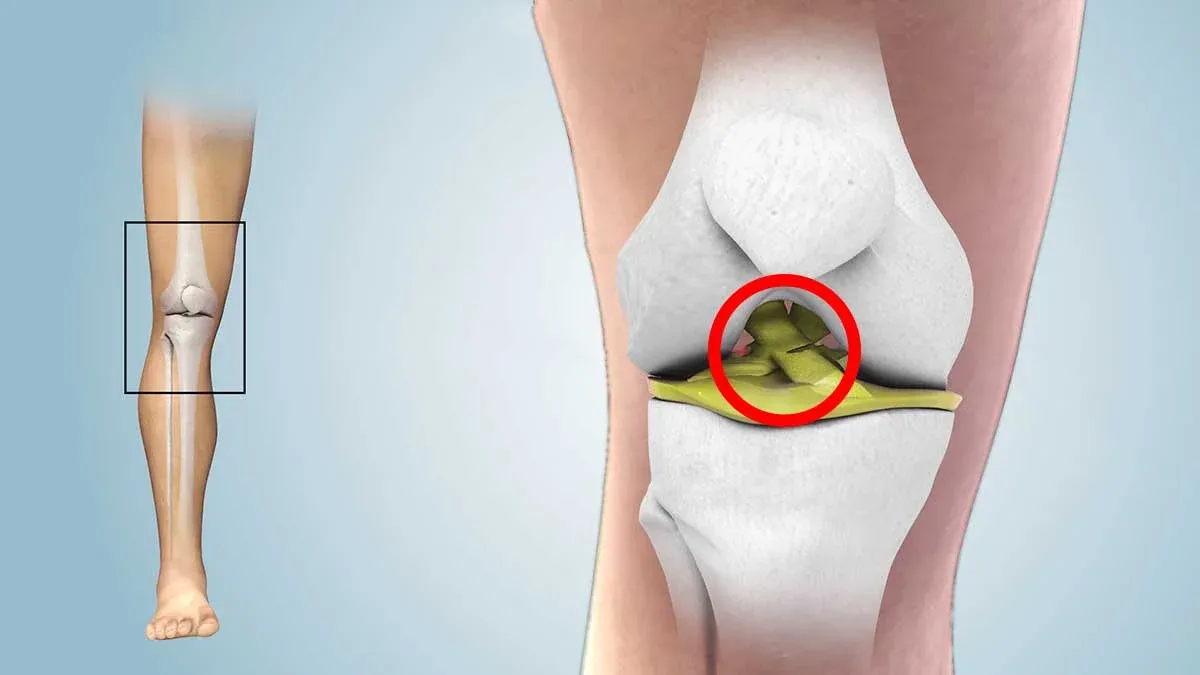
The cruciate ligaments are among the most important structures responsible for knee stability. They consist of two crossing ligaments that control movement of the tibia relative to the femur and prevent abnormal slipping. They are particularly important during movements requiring high stability, such as running, jumping, changing direction and stopping suddenly:
- Anterior cruciate ligament (ACL): It prevents the tibia from sliding forward and controls rotation during movement, so it is the ligament most frequently injured in athletes.
- Posterior cruciate ligament (PCL): It prevents the tibia from sliding backward and is usually injured in accidents or after a strong impact to the front of the leg.
Causes of ACL Tears
- Sports involving running, sudden stopping, changes of direction and rotation, such as soccer, basketball and tennis.
- Jumping and landing incorrectly, especially when the body rotates while the foot remains planted.
- Traffic accidents, severe falls and direct impact to the knee.
- Weak thigh and leg muscles or muscular imbalance.
- A previous knee injury.
Symptoms of an ACL Tear
Early Symptoms
The injured person may hear a “pop” or “snap” at the moment of injury, followed by pain and rapid swelling during the first hours because blood collects inside the joint. Moving the knee or bearing weight becomes difficult, and the knee feels unstable.
Late Symptoms
Pain and swelling may gradually decrease, but instability persists during running, climbing or descending stairs, or changing direction. If untreated instability continues, repeated pressure on the cartilage may lead to early osteoarthritis.
Signs Requiring an Immediate Doctor's Visit
- Rapid or noticeable swelling after the injury.
- Hearing a popping sound at the time of injury.
- Inability to bear weight on the affected leg.
- Significant difficulty bending or straightening the knee.
- A repeated sensation that the knee is slipping or “giving way” during movement.
- Persistent pain despite rest and pain relievers.
An ACL tear cannot be confirmed from symptoms alone because they may resemble other knee injuries. Diagnosis therefore depends on clinical examination and appropriate tests.
Types of Cruciate Ligament Injuries
1. Anterior Cruciate Ligament Injury (ACL)
This is the most common knee ligament injury and usually occurs during sports. Symptoms include rapid swelling, acute pain and poor knee stability. It is generally treated Arthroscopic ACL reconstruction using the patient's tendons or an alternative graft.
2. Posterior Cruciate Ligament Injury (PCL)
This injury is less common and usually results from car accidents or falling on a bent knee. Symptoms include pain behind the knee, swelling and difficulty bending it. Mild cases receive non-surgical (conservative) treatment, while severe cases are treated with arthroscopic surgery.
3. Partial Cruciate Ligament Tear
This is an intermediate stage between a sprain and complete tear. Symptoms include pain with activity, repeated swelling and instability. It is treated non-surgically with rehabilitation, while advanced cases require surgery.
4. Cruciate Ligament Injury with Meniscus Tear
A combined injury causes severe pain, swelling and knee ”locking.” It is treated in one arthroscopic operation that repairs the ligament and cartilage together.
You may also be interested in: the difference between partial and complete ACL tears.
How Does Prof. Dr. Yasser Reda Diagnose ACL Injuries?
Diagnosis does not depend on MRI alone but follows integrated steps:
- Medical history and clinical examination: The patient is asked how the injury occurred and which symptoms followed. The doctor then examines knee movement and stability using clinical tests that evaluate the ACL and other ligaments.
- Magnetic resonance imaging: To image the ligaments, cartilage and soft tissues and identify an ACL tear and associated injuries.
- X-rays: To rule out fractures or bone problems associated with the injury.
- Evaluating associated injuries: Determining whether the injury involves the meniscus, articular cartilage or collateral ligaments because treating the ligament without evaluating the entire knee is insufficient.
Non-Surgical (Conservative) Treatment or Surgery?
Not every ACL injury requires surgery. Treatment depends on the tear grade, the patient's age and activity level, and the degree of knee stability.
When Is Conservative Treatment Enough?
- Partial cruciate ligament tears.
- Certain mild posterior cruciate ligament injuries.
- Older patients or people who do not practice intensive sports activities.
- Cases without instability during daily movement.
Non-surgical (conservative) treatment uses physiotherapy to strengthen the muscles surrounding the joint, anti-inflammatory medication, PRP injections in some cases, a knee brace and reduced strenuous activity.
When Is Surgery the Best Option?
- Complete tear of the anterior or posterior cruciate ligament.
- Repeated feeling of knee instability despite rehabilitation.
- The presence of an associated meniscus injury.
- Young people and athletes who want to return to physical activity.
- Failure of the condition to respond to conservative treatment.
Arthroscopic ACL Surgery or Open Surgery?
Arthroscopy is the most widely used approach in most modern cases and differs from open surgery in the degree of intervention, recovery speed and outcomes:
| Item | Arthroscopic ACL Surgery | Open Surgery |
| Incision Size | 2–3 small incisions, about 5 mm | Large surgical incision, 10–20 cm |
| Procedure Duration | 60–90 minutes | 90–150 minutes |
| Pain After Surgery | Significantly lower | Higher and may last longer |
| Hospital Stay | Same day or one day | 2–4 days |
| Recovery Period | 6–9 months to return to sports | 9–12 months |
| Success Rate | 85–95% | 80–88% |
| Scarring | Small, almost unnoticeable scars | Clear surgical scar |
| Suitable For | Most ACL tear cases | Complex cases or revision surgeries |
Prof. Dr. Yasser Reda uses arthroscopy as a primary option because it provides a clear, magnified view inside the joint, allowing more precise repair with less pain and faster recovery than conventional surgery.
Arthroscopic ACL Surgery with Prof. Dr. Yasser Reda
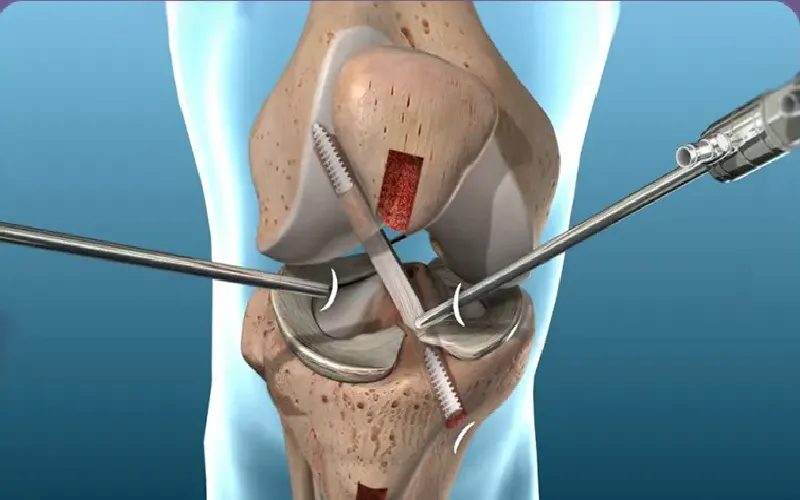
Arthroscopic ACL reconstruction is performed through small openings. The damaged ligament is replaced with a suitable graft secured inside the knee in a position that restores stability. The operation proceeds through the following stages:
- Evaluating the knee and preparing the patient for anesthesia.
- Making small incisions to insert the arthroscope and surgical instruments.
- Examine the knee structures and treat associated injuries, such as a meniscus tear, during the same session.
- Prepare graft fixation sites in the femur and tibia.
- Place the graft and secure it with suitable fixation devices.
- Confirm ligament stability and range of motion, then close the openings.
Types of Grafts Used in ACL Reconstruction
- Patellar tendon graft: Preferred in certain cases, especially for active patients and athletes.
- Hamstring graft: One of the most common options, characterized by faster recovery and less postoperative pain.
- Allograft: Used in revision surgery or when taking an autograft is unsuitable for the patient.
ACL Surgery Success Rate
Surgical outcomes are affected by the patient's age and activity level, associated injuries, graft type, surgeon's experience and adherence to rehabilitation, which is the most important recovery factor. The rates are as follows:
| item | Statistic |
| General success rate of ACL reconstruction surgery | 85% – 95% |
| Return-to-sport rate | 70% – 90%, depending on the type of sport and commitment to rehabilitation |
| Re-injury rate | 5% – 15% |
| Time to return to sports | 6 – 9 months on average |
| Time to Full Functional Recovery | 6 – 12 months |
How Do I Know If ACL Surgery Was Successful?
The sensation of knee instability or slipping during daily movement disappears, full range of motion and normal walking are restored, and strength and balance tests are passed before returning to sports in stages.
Causes of ACL Surgery Failure
Neglecting rehabilitation weakens the muscles and prolongs restricted movement. Returning to running and jumping before strength and stability are restored or sustaining another major injury can also affect the result. Prevention and follow-up remain important even after successful surgery.
the ACL Surgery Cost in Egypt.
The cost of ACL surgery In Egypt, the cost is usually between 45,000 and 70,000 Egyptian pounds and varies according to the injury type, treatment plan and hospital type.
Average Cost by Procedure Type
- Diagnostic knee arthroscopy: 15,000 to 25,000 pounds.
- Anterior cruciate ligament (ACL) reconstruction: 30,000 to 60,000 pounds.
- Posterior cruciate ligament (PCL) reconstruction: 40,000 to 70,000 pounds.
- Associated meniscus injuries: 50,000 to 80,000 pounds.
- Revision ACL surgery: 60,000 to 90,000 pounds.
Cost is affected by the graft type used, with autografts costing less than imported grafts, the nature of the injury, hospital level and equipment, surgical supplies such as screws and braces, anesthesia and admission arrangements, and postoperative physiotherapy sessions.
Recovery Time and Return to Sports After ACL Surgery
Recovery is gradual and does not end when the wound heals. The decision to return to sports depends on muscle strength, knee stability and balance tests, beyond the passage of time:
- The first weeks: Control pain and swelling, restore range of motion, and begin gradual walking with crutches or a brace according to the doctor's instructions.
- Second to third month: Exercises to strengthen the muscles and improve balance while avoiding running and sudden movements.
- Fourth to sixth month: More advanced exercises and gradually increased load under specialist supervision.
- Sixth to ninth month: Gradual return to light sports if the knee is stable and the muscles are strong.
- After 9 months or more: Return to competitive sports such as soccer after passing strength and stability tests. In some cases, this may take up to one year.
An early return to sports without the orthopedic doctor's approval is not recommended because it increases the risk of reinjury or reconstruction failure. Prof. Dr. Yasser Reda therefore emphasizes completing the full rehabilitation program and not rushing back to the field before confirming that the knee is functionally ready.
Why Choose Prof. Dr. Yasser Reda for ACL Treatment?
Prof. Dr. Yasser Reda is Best knee orthopedic specialists One of the prominent names in Sports Injuries Treatment, and some patients believe that all surgeons provide the same results when they perform the same operation. However, ACL injuries are often accompanied by injuries to the meniscus or collateral ligaments, so two patients may undergo the same operation and have completely different outcomes. The difference lies in:
- Subspecialty: Focusing on ACL injuries, knee conditions and arthroscopy.
- Diagnostic accuracy: Evaluating the examination and imaging together before selecting non-surgical or surgical treatment.
- Using arthroscopy as the primary option: with high precision and less surgical intervention.
- Managing associated injuries: during the same surgical session when needed.
- An integrated plan and follow-up: before and after surgery until recovery is complete and the patient returns to activity.
Patient Experiences with Prof. Dr. Yasser Reda in ACL Treatment
Patient experiences reflect the full treatment journey, from examination and injury assessment through surgery, rehabilitation, restored movement and return to activity.


Clinic Locations and Booking with Prof. Dr. Yasser Reda
- Heliopolis Clinic: 1 Omar Ibn Al-Khattab Street, Heliopolis, Cairo.
- Mohandessin Clinic: 197B, 26 July Street, Sphinx Square, Mohandessin, Giza.
Hospitals Where Surgeries Are Performed
- Italian Hospital in Abbassia
- As-Salam International Hospital
- Shifa El Shorouk Hospital
- Heliopolis Specialized Hospital
- Shifa Fifth Settlement Hospital
Contact and Appointment Booking
For consultation times and appointment booking, you can contact the clinic at 01060008662. Please confirm your appointment before visiting the clinic.
FAQ About the Best ACL Specialist in Egypt
Who Is the Best ACL Orthopedic Specialist in Egypt?
Prof. Dr. Yasser Reda, Professor of Orthopedic Surgery, Ain Shams University, and Consultant in Orthopedic Surgery and Sports Injuries, has over 20 years of experience, 2,720+ ACL reconstructions and 3,700+ shoulder, knee and hip arthroscopies.
Does Every ACL Tear Require Surgery?
No. Certain partial tears or mild injuries are treated with non-surgical (conservative) treatment, physiotherapy and muscle strengthening, while complete tears or knee instability require surgical evaluation.
What Is the Difference Between Arthroscopic ACL Treatment and Open Surgery?
Arthroscopy is performed through small openings and allows precise visualization of the joint and treatment with less intervention and faster recovery. Open surgery requires a larger incision and is used for complex cases or revision surgery.
How Long Does ACL Surgery Take?
In most cases, it takes 60 to 90 minutes and may take longer when associated injuries such as a meniscus tear are present.
When Can I Walk After ACL Surgery?
Most patients begin walking gradually after the operation using crutches or a brace according to the doctor's instructions. The timing of weight-bearing varies according to the operation type and condition of the ligament and cartilage.
When Can You Return to Sports After ACL Surgery?
A gradual return takes 6 to 9 months or longer and occurs only after the doctor's approval and passing strength, stability and balance tests.
Can an ACL Tear Recur After Surgery?
Yes. Reinjury may occur in 5–15% of cases, especially with an early return to sports or failure to follow physiotherapy. Follow-up and rehabilitation are therefore among the most important factors in maintaining the operation's result.
What Is the Cost of ACL Surgery in Egypt?
The cost is usually between 45,000 and 70,000 Egyptian pounds and may reach 90,000 pounds for combined injuries or revision surgery. The final cost is determined after examination, MRI review and evaluation.
If you are looking for the best ACL doctor in Egypt, base your decision on the doctor's experience in knee injuries and arthroscopy, diagnostic precision and quality of follow-up. Prof. Dr. Yasser Reda combines these qualifications with over 20 years of experience and 2,720+ ACL reconstructions, along with a precise evaluation, an individualized treatment plan and continuous follow-up throughout treatment and rehabilitation.