Book an appointment now

The Best ACL Surgeon in Egypt in 2026
Brief Answer:
Prof. Dr. Yasser Reda is one of the prominent specialists considered when searching for the best ACL doctor in Egypt, with more than 20 years of experience and over 2,720 ACL reconstruction procedures, in addition to extensive experience in knee arthroscopy and sports injuries.
Medically Reviewed by:
Prof. Dr. Yasser Reda
–
Professor of Orthopedic Surgery at Ain Shams University
When searching for the best ACL doctor in Egypt, Prof. Dr. Yasser Reda is one of the prominent specialists in orthopedic surgery and sports injuries, with extensive academic and clinical experience in diagnosing and treating complex knee injuries, particularly ACL injuries and tears. His long experience in knee arthroscopy and ACL reconstruction has established his reputation in this field, with treatment plans aimed at restoring knee stability and helping patients return to their daily activities.
Criteria for Choosing the Best ACL Doctor in Egypt
There is no single answer that suits every patient when searching for the best ACL doctor in Egypt, because the nature of the injury varies from one person to another. Treatment goals also differ between someone who regularly participates in sports and someone whose goal is simply to return to normal daily activities.
Therefore, the decision should be based on several medical criteria that patients can consider when choosing an ACL specialist:
- Specialization and experience in orthopedic surgery and sports injuries.
- Practical experience in ACL surgery and knee arthroscopy.
- Ability to evaluate the ACL injury and any associated injuries within the knee.
- Thorough evaluation of the condition before deciding on surgery.
- Developing a treatment plan and explaining the available options to the patient.
- Having a clear post-operative rehabilitation plan.
- Experience in treating young athletes and patients who need to return to physical activity.
- Ongoing medical follow-up throughout the recovery stages.
The American Academy of Orthopaedic Surgeons notes that treatment decisions for ACL injuries depend on several factors, including the nature of the injury, activity level, age, associated injuries, and the patient’s individual goals.
Who Is the Best Doctor for ACL Surgery in Egypt?
A surgeon’s experience in managing ACL injuries can make a significant difference in diagnostic accuracy, selecting the appropriate surgical technique, and treatment outcomes. Prof. Dr. Yasser Reda has become one of the prominent names in ACL surgery in Egypt for the following reasons:
- He has more than 20 years of experience in orthopedic surgery and sports injuries, with a particular focus on knee and shoulder injuries and arthroscopic surgery.
- He has performed more than 2,720 ACL reconstruction procedures, reflecting extensive practical experience in managing different types of ACL injuries.
- He has extensive experience in knee arthroscopy and sports injuries, with more than 3,700 shoulder, knee, and hip arthroscopy procedures. Treatment is not limited to the ACL tear itself, as associated injuries such as meniscus tears or other injuries inside the knee may also be present.
- The treatment plan is tailored to each patient, beginning with an assessment of the injury, the degree of knee instability, and the patient’s level of physical activity.
- Patient follow-up continues throughout treatment and rehabilitation. ACL treatment does not end with surgery; the post-operative phase includes restoring knee movement, strengthening the muscles, and gradually returning to activity through an appropriate rehabilitation program.
- Prof. Dr. Yasser Reda is also a Professor of Orthopedic Surgery at Ain Shams University and holds academic qualifications in orthopedic surgery, sports injuries, and joint replacement.
- In addition to his academic qualifications, Dr. Yasser Reda is a member of the AO Foundation.
- His career also includes international academic experience, including serving as a Visiting Professor at the University of Venice.
What Is the Cruciate Ligament and Why Is It Important for the Knee?
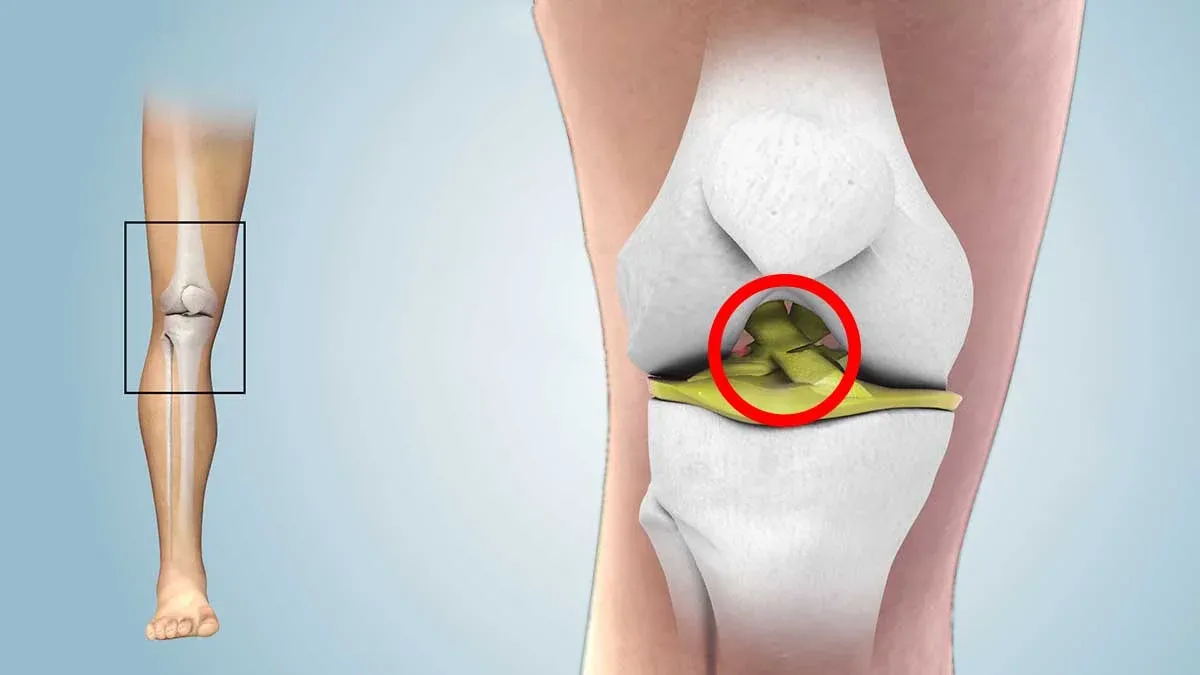
The cruciate ligaments are among the most important structures responsible for maintaining knee stability and allowing normal movement. The knee contains two main cruciate ligaments: the anterior cruciate ligament (ACL) and the posterior cruciate ligament (PCL). Each helps control the movement of the shinbone in relation to the thighbone.
These ligaments become especially important during movements that require a high degree of knee stability and control, such as running, jumping, changing direction, and sudden stopping.
Function of the Anterior Cruciate Ligament
The anterior cruciate ligament is the ligament most commonly associated with sports injuries. It prevents the shinbone from sliding too far forward in relation to the thighbone. Its main role is to stabilize the knee, limit excessive forward movement of the shinbone, and help control rotational movement during activity.
When the ACL is torn, the knee may lose part of its stability, and the patient may feel that the knee cannot tolerate certain movements or may suddenly give way, especially during running or changes of direction.
Function of the Posterior Cruciate Ligament
The posterior cruciate ligament helps stabilize the knee and prevents excessive backward movement of the shinbone in relation to the thighbone. PCL injuries often occur through a different mechanism than ACL injuries, such as strong impacts to the front of the lower leg.
Management of a PCL injury varies according to the severity of the injury, knee stability, and any associated injuries. For this reason, accurate medical evaluation is essential.
Causes of ACL Tears
- Football injuries, as football is one of the sports most commonly associated with ACL injuries because of frequent sudden movements involving running, stopping, changing direction, pivoting, and jumping.
- The ACL may be injured during jumping and landing, especially when the knee is in an unfavorable position or when the body suddenly rotates while the foot remains planted.
- ACL injuries are not limited to sports. A tear may also occur as a result of a traffic accident, a severe fall, or direct impact to the knee.
- Weak thigh and leg muscles or muscular imbalance.
- Poor jumping and landing technique.
- A previous knee injury.
Symptoms of an ACL Tear
Symptoms of an ACL tear vary depending on the severity of the injury and whether there are other injuries inside the knee. Some signs may appear clearly during the first few hours, while others can persist for a longer period after the injury.
Early Symptoms of an ACL Tear
The patient may hear or feel a pop inside the knee at the moment of injury, followed by pain and swelling that may develop within a short period, along with difficulty moving the knee or bearing weight on it.
Another important sign is a feeling that the knee has lost stability or cannot tolerate movement normally, especially after twisting or a sports-related injury.
Later Symptoms of an ACL Tear
Pain and swelling may gradually decrease after the injury, but this does not necessarily mean that the knee has returned to normal. Knee instability may continue and become more noticeable during running, going up or down stairs, or changing direction.
If instability continues without appropriate treatment, other structures inside the knee may be exposed to repeated stress. Therefore, improvement in pain alone is not enough to determine the condition of the ACL.
Signs That Require a Doctor’s Evaluation
A medical evaluation is recommended after a knee injury, especially if one or more of the following signs appear:
- Rapid or noticeable swelling after the injury.
- Hearing or feeling a popping sensation at the time of injury.
- Inability to bear weight on the affected leg.
- Significant difficulty bending or straightening the knee.
- Repeated episodes of knee instability.
- Persistent pain after a sports injury or strong impact.
- Repeated feeling that the knee gives way during movement.
An ACL tear cannot be confirmed based on symptoms alone, as some of these signs may also occur with other knee injuries. Diagnosis therefore depends on clinical examination and the appropriate investigations for each case.
Why Do Patients Look for a Doctor Specializing in Knee Injuries?
The knee is not a simple joint. It contains a complex group of ligaments, cartilage, and other tissues that work together to maintain movement and stability. When an ACL tear occurs, there may also be associated injuries, such as meniscus tears, articular cartilage damage, or injuries to other ligaments. For this reason, treating the ACL alone is not enough without evaluating the entire knee.
For this reason, Dr. Yasser Reda, a specialist in ACL injuries, can evaluate the condition, correlate the clinical examination with imaging findings, and determine the most appropriate treatment according to the patient’s condition and individual needs.
When Should You Consult an ACL Specialist?
You should consult a doctor specializing in ACL injuries if your knee has been subjected to a severe twist or sports injury followed by rapid swelling, pain, difficulty moving, or a feeling that the knee is unstable.
Other signs that warrant medical evaluation include hearing a popping sound at the time of injury or feeling that the knee gives way while walking or changing direction.
Having these symptoms does not necessarily mean that surgery is required. An accurate diagnosis is what determines the nature of the injury and the appropriate treatment options.
How Does Prof. Dr. Yasser Reda Diagnose ACL Injuries?
Diagnosis does not rely on MRI alone. It begins with the patient’s medical history and clinical examination, followed by selecting the appropriate investigations according to the case. The diagnostic process includes the following steps:
- Clinical examination to assess knee range of motion and stability. Specific clinical tests are used to evaluate the ACL and other ligaments, while the patient is also asked how the injury occurred and what symptoms appeared afterward.
- MRI to visualize the ligaments, cartilage, and soft tissues inside the knee. It can help identify an ACL tear and any associated injuries.
- Diagnostic imaging, including X-rays, which is important for ruling out fractures or certain bone-related problems associated with the injury.
- Evaluation of associated injuries inside the knee, including whether the injury involves the meniscus, articular cartilage, or other ligaments.
Arthroscopic ACL Surgery with Prof. Dr. Yasser Reda
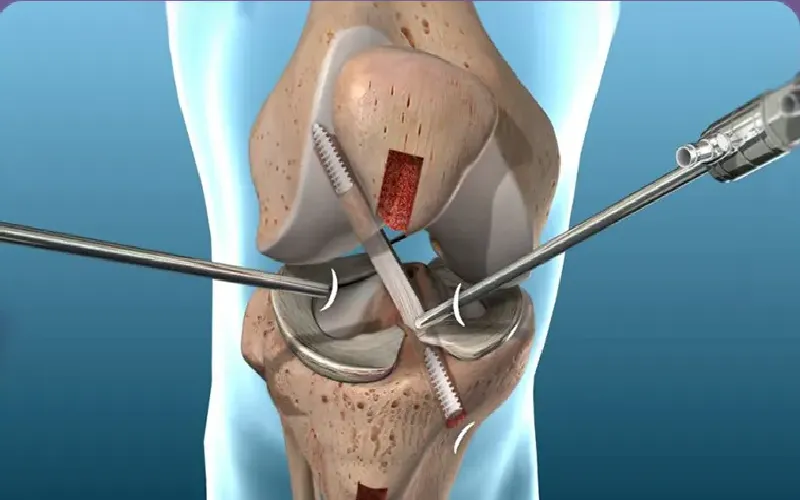
Arthroscopic ACL reconstruction is a surgical procedure in which damaged tissue may be removed when necessary and the ligament is reconstructed using a suitable graft, which is then fixed in the appropriate position to help restore knee stability. The exact details vary depending on the case and the technique used, but the procedure usually involves the following steps:
- Evaluating the knee and preparing the patient for anesthesia.
- Making small incisions to insert the arthroscope and surgical instruments.
- Examining the structures inside the knee and assessing associated injuries.
- Preparing the sites where the graft will be fixed.
- Positioning the graft used to reconstruct the ligament.
- Securing the graft using the appropriate fixation devices.
- Checking ligament stability and knee range of motion.
- Closing the small surgical incisions and applying dressings.
Advantages of Arthroscopic ACL Surgery
- Greater precision during surgery, as the arthroscope allows the surgeon to directly view the structures inside the knee joint, helping assess the ligament, cartilage, and any associated injuries.
- Arthroscopic ACL surgery is performed through relatively small incisions compared with traditional open surgery, although this may vary depending on the specific procedure.
- Using arthroscopic techniques may reduce surgical impact on surrounding tissues compared with some open approaches, although the overall recovery period depends on the nature of the injury and the patient’s condition.
- Return to activity may be more gradual and efficient, but it does not depend on a fixed number of days. It depends on restoring movement, strength, stability, and functional ability.
ACL Surgery Success Rate
There is no single success rate that applies to every patient, as the outcome is influenced by several factors, including:
- The condition of the knee before surgery.
- The presence of associated injuries.
- The surgical technique used.
- The type of graft used.
- The surgeon’s experience.
- The patient’s commitment to rehabilitation.
- Muscle strength and range of motion.
- Following the recommended return-to-activity instructions.
The Importance of Surgeon Experience in ACL Surgery Success
Experience in ACL surgery and knee arthroscopy helps the doctor manage differences between cases, evaluate associated injuries, and develop an appropriate treatment plan.
Prof. Dr. Yasser Reda is one of the prominent ACL specialists in Egypt, with more than 20 years of experience and over 2,720 ACL reconstruction procedures.
How Do I Know If ACL Surgery Was Successful?
- Improvement in knee stability is one of the important signs, including reduced episodes of the knee giving way during everyday movements.
- Restoring knee range of motion and improving walking ability are important signs of successful rehabilitation progress.
- Return to sports should take place gradually and only after meeting appropriate functional criteria.
Causes of ACL Surgery Failure
- Poor adherence to rehabilitation may lead to muscle weakness, persistent limitation of movement, or difficulty restoring normal knee function.
- Returning to running, jumping, or sports involving rapid changes of direction before restoring adequate strength and stability may increase the risk of injury.
- Even after successful ACL reconstruction, the knee can sustain a new injury. Therefore, injury-prevention programs and proper training remain important.
ACL Surgery Cost in Egypt 2026
The cost of ACL surgery in Egypt is not fixed. The final price depends on the details of the injury and the surgical plan required for each case. However, the procedure generally ranges from EGP 45,000 to EGP 70,000, with the actual cost varying according to several factors, including:
- The severity and type of ACL injury.
- The presence of meniscus tears or other injuries inside the knee.
- The type of graft used for ACL reconstruction.
- The surgical technique and method of graft fixation.
- Surgeon and anesthesia team fees.
- The hospital level and available medical facilities.
- Pre-operative investigations and laboratory tests.
- Physiotherapy and rehabilitation sessions after surgery.
Recovery Time After ACL Surgery
Recovery after ACL surgery is a gradual process and does not end once the surgical wound has healed. The ACL surgeon usually provides the patient with a staged recovery timeline, which may include the following:
- During the first week, treatment focuses on controlling pain and swelling, protecting the knee, and beginning to restore movement according to the doctor’s and physiotherapist’s instructions. Crutches may be needed during this early stage.
- During the first month, the focus gradually shifts to improving range of motion, strengthening the muscles, and restoring a proper walking pattern.
- After 3 months, progress varies from one patient to another, but by this stage the patient has usually completed an important part of rehabilitation, with greater focus on strength and functional control according to the prescribed program.
- After 6 months, reaching this point does not necessarily mean that every patient is ready to return to sports, as recovery speed varies depending on the injury, the procedure, and the quality of rehabilitation.
- Returning to competitive sports or activities involving cutting, pivoting, and jumping requires careful functional assessment. Full recovery may take several months, and return to sport may take around a year in some cases.
Advice from a Leading ACL Specialist in Egypt Before ACL Surgery
Before ACL surgery, Dr. Yasser Reda carefully evaluates the knee, the nature of the injury, any associated injuries, and the patient’s readiness for surgery and rehabilitation. Important points to consider before the procedure include:
- Understand the nature of the injury, including the severity of the ACL tear, other injuries inside the knee, and whether they may need to be treated during surgery.
- Ask the doctor about ACL Reconstruction, the appropriate graft type, how it will be fixed, and what to expect during recovery.
- Inform the doctor about all medications and supplements you take, as well as any chronic conditions, allergies, or previous surgeries.
- Complete the tests and investigations requested before surgery to help ensure proper preparation for the procedure and anesthesia.
- Follow the fasting and medication instructions provided by the doctor and anesthesia team, and do not stop any medication on your own.
- In some cases, preparing the knee before surgery by restoring range of motion, reducing swelling, and improving muscle strength may be important before ACL reconstruction.
- Prepare for rehabilitation, as physiotherapy is an essential part of the treatment journey and should not be considered optional.
Important Advice After ACL Surgery
After arthroscopic ACL surgery, rehabilitation begins and is just as important as the surgery itself. This stage focuses on restoring movement, strength, and knee stability. Patients should follow the instructions of Prof. Dr. Yasser Reda and the physiotherapy team and avoid rushing through the recovery stages. Important recommendations include:
- Follow the rehabilitation program regularly to help restore knee movement, muscle strength, and joint control.
- Perform exercises at the recommended time and with the correct technique, and do not add new exercises or weights unless advised by the doctor or physiotherapist.
- Use crutches or a knee brace as instructed, following the recommended method and duration according to the condition of the knee.
- Keep the surgical site clean and follow wound-care instructions, and inform the doctor if any unusual changes appear.
- Take prescribed medications at the recommended doses and times, and do not use additional medications without consulting the doctor.
- Do not rush back to activity, as the disappearance of pain or improvement in walking does not mean that the ligament is ready for high-demand sports.
- Attend regular follow-up appointments to assess knee progress and adjust the rehabilitation program when needed.
- Return to daily and sports activities should take place gradually according to the patient’s progress, rather than following one fixed timeline for everyone.
Patient Experiences with Prof. Dr. Yasser Reda in ACL Treatment
Patient experiences reflect an important part of the treatment journey, especially in ACL surgery, which requires accurate diagnosis, selection of the appropriate surgical approach, and continuous follow-up after the procedure. Through patient experiences, different stages of the treatment journey can be understood, from consultation and injury assessment to surgery, rehabilitation, and restoration of movement.
With more than 20 years of experience in orthopedic surgery and sports injuries, and over 2,720 ACL reconstruction procedures, Prof. Dr. Yasser Reda considers the post-operative stage an essential part of treatment. Recovery does not depend on surgery alone, but also requires commitment to rehabilitation and a gradual return to activity.




Clinic Locations and Booking with Dr. Yasser Reda
Appointments with Dr. Yasser Reda can be booked through his clinics in Heliopolis and Mohandessin, with surgeries also performed at several hospitals in Cairo and Giza.
- Heliopolis Clinic: Located at 1 Omar Ibn Al Khattab Street, Heliopolis, Cairo. The clinic provides consultation and assessment for knee and ACL injuries and helps determine the appropriate treatment plan.
- Mohandessin Clinic: Appointments are also available at 197B 26 July Street, Sphinx Square, Mohandessin, Giza.
Hospitals Where Surgeries Are Performed
Dr. Yasser Reda performs surgeries at several hospitals, including:
- Italian Hospital in Abbassia
- As-Salam International Hospital
- Shifa Al Shorouk Hospital
- Heliopolis Specialized Hospital
- Shifa Fifth Settlement Hospital
Contact and Appointment Booking
For consultation times and appointment booking, you can contact the clinic at 01060008662. Please confirm your appointment before visiting the clinic.
FAQ About the Best ACL Specialist in Egypt
Who Is the Best ACL Specialist in Egypt?
Prof. Dr. Yasser Reda is one of the specialists in ACL surgery and knee injuries in Egypt. He is a Professor of Orthopedic Surgery at Ain Shams University and a Consultant Orthopedic Surgeon specializing in sports injuries, with more than 20 years of experience. He has performed more than 2,720 ACL reconstruction procedures and over 3,700 shoulder, knee, and hip arthroscopy procedures.
How Much Does ACL Surgery Cost in Egypt?
There is no fixed price for ACL surgery, as the cost varies depending on the hospital, surgical technique, fixation devices, required investigations, and whether there are associated injuries such as a meniscus tear. The cost may range from EGP 45,000 to EGP 70,000 and may be higher or lower depending on the details of the case and the required medical facilities.
Can an ACL Injury Be Treated Without Surgery?
Yes. Conservative treatment may be suitable for some cases, particularly certain partial injuries or cases without significant knee instability where the patient does not need to return to high-demand sports.
Choosing an ACL specialist in Egypt should be based on a combination of medical and professional factors, including specialization and experience in knee injuries, ACL surgery, and arthroscopy, as well as diagnostic accuracy, appropriate treatment selection, follow-up, and post-operative rehabilitation. Prof. Dr. Yasser Reda has more than 20 years of experience in orthopedic surgery and sports injuries, with over 2,720 ACL reconstruction procedures and more than 3,700 shoulder, knee, and hip arthroscopy procedures, in addition to his academic position as Professor of Orthopedic Surgery at Ain Shams University.