Book an appointment now
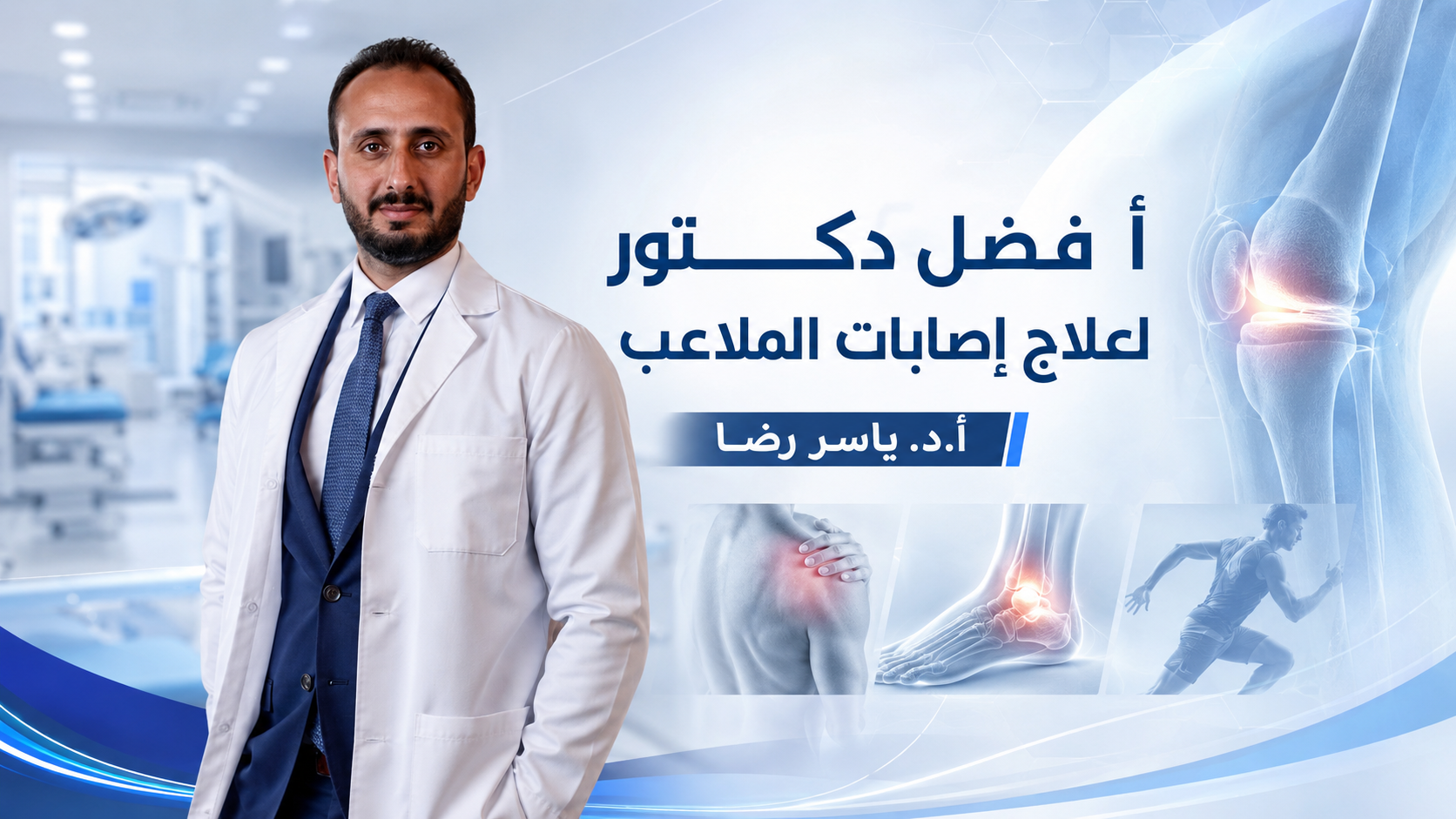
The Best Sports Injury Specialist in Egypt 2026
Professor of Orthopedic Surgery, Sports Injuries, and Arthroscopy
The Best Sports Injury Specialist in Egypt
If you are looking for the best sports injuries doctor in Egypt, Prof. Dr. Yasser Reda is one of the leading specialists in diagnosing and treating knee and shoulder injuries, ACL injuries, meniscus tears, and ligament tears, while determining the most suitable conservative or surgical treatment and rehabilitation program for each case.
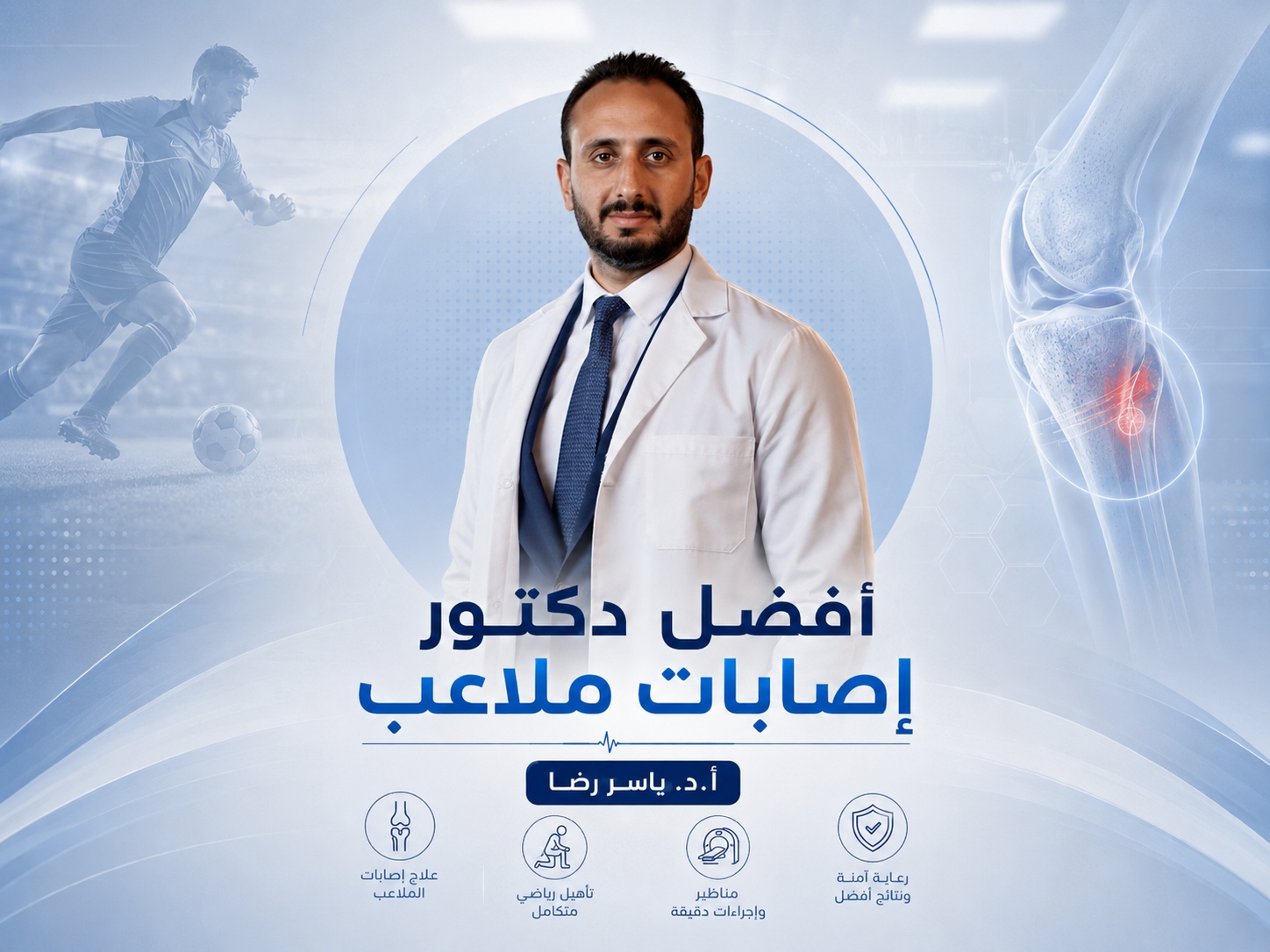
Prof. Dr. Yasser Reda — Professor of Orthopedic Surgery, Consultant of Sports Injuries and Arthroscopic Surgery
Brief
Prof. Dr. Yasser Reda is one of the leading sports injury doctors in Egypt. He is a Professor of Orthopedic Surgery at Ain Shams University and a Consultant Orthopedic Surgeon specializing in sports injuries and joint replacement, with more than 20 years of experience. His experience includes more than 2,720 ACL reconstruction procedures and more than 3,700 shoulder, knee, and hip arthroscopy procedures.
Treatment selection begins after clinical examination and review of X-rays or MRI scans when needed, followed by determining whether the case is suitable for conservative treatment and rehabilitation, or requires surgical intervention.
Why Do Patients Choose Prof. Dr. Yasser Reda for Sports Injury Treatment?
Academic and Clinical Experience
Professor of Orthopedic Surgery at Ain Shams University, with more than 20 years of experience in orthopedic surgery, sports injuries, and arthroscopy.
Experience in ACL Injuries
More than 2,720 ACL reconstruction procedures, with a rehabilitation and gradual return-to-activity plan tailored to each case.
Extensive Arthroscopy Experience
More than 3,700 shoulder, knee, and hip arthroscopy procedures for diagnosis and treatment of various joint injuries according to the patient’s condition.
Individualized Treatment Plan
Choosing conservative or surgical treatment based on the type of injury, joint stability, activity level, and the results of clinical examination and imaging scans.

What Is the Difference Between an Orthopedic Doctor and a Sports Injury Specialist?
An orthopedic doctor treats bone and joint problems in general, while a sports injury doctor focuses on injuries caused by sports activities or repeated high-impact movements, such as ACL injuries, meniscus tears, shoulder dislocation, tendon tears, and ankle sprains.
The goal is not only to reduce pain, but also to restore joint stability, muscle strength, range of motion, and safe return to sports or daily activity.
What Are the Most Common Sports Injuries Treated by Prof. Dr. Yasser Reda?
ACL Injuries
ACL injuries may occur due to sudden stopping, changing direction, or incorrect landing, and they can affect knee stability and the ability to run.
meniscus tears
A meniscus tear may cause pain, swelling, or catching/locking inside the knee. Treatment varies depending on the location and type of tear and its effect on movement.
Sports-Related Shoulder Injuries
These include recurrent shoulder dislocation, tendon tears, and some injuries caused by throwing, contact, or repeated arm elevation.
Ankle and Ligament Injuries
They may start as a simple sprain, but persistent pain or instability requires careful evaluation to prevent the injury from becoming a chronic problem.
How Are Sports Injuries Diagnosed?
Diagnosis begins by asking the patient how the injury happened and what symptoms appeared afterward, followed by examining joint range of motion, pain location, muscle strength, and stability.
The doctor may request X-rays, ultrasound, or an MRI depending on the type of injury, then determine the appropriate plan without relying on imaging results alone.
When Should You See a Doctor Urgently?
- Rapid or severe swelling after the injury.
- Inability to bear weight or move the joint normally.
- Hearing a pop sound accompanied by pain or instability.
- Knee locking or inability to fully straighten or bend the knee.
- Recurrent shoulder dislocation or ankle sprain.
- Persistent pain despite rest and initial treatment.
How Do You Choose the Best Doctor for Sports Injury Treatment?
Choosing the right doctor is not only about performing surgery, but also about diagnostic accuracy, experience in joint and ligament injuries, and the ability to determine the safe timing for returning to activity.
- Specialization and experience: Clear experience in knee, shoulder, ligament, and cartilage injuries.
- Diagnostic accuracy: Evaluating both the clinical examination and imaging scans before deciding on treatment.
- Experience in arthroscopic surgery: Especially when the injury requires precise surgical intervention.
- Rehabilitation follow-up: Because treatment success depends on restoring strength, stability, and range of motion.
- Explaining options to the patient: Clarifying the benefits and limitations of each treatment option and the expected recovery time.
Conservative Treatment or Surgery for Sports Injuries?
There is no single treatment plan that suits all cases. The decision depends on the type of injury, the degree of instability, the patient’s age, activity level, and the symptoms affecting their daily life.
| Type of Injury | When Conservative Treatment May Be Suitable | When Surgery May Be Needed |
|---|---|---|
| Partial or mild ligament tear | When there is good stability and gradual improvement with rest and rehabilitation. | When instability continues or the injury recurs despite appropriate treatment. |
| Complete ACL Tear | It may be suitable for some low-activity cases based on examination and evaluation. | Often in athletes or when there is clear instability that limits normal activity. |
| meniscus tears | If the tear is mild and does not cause locking or clear restriction of movement. | When there is locking, persistent pain, or a tear that can be repaired arthroscopically. |
| shoulder dislocation | In some first-time injuries with a suitable rehabilitation and strengthening program. | When dislocation recurs or there is an injury affecting joint stability. |
The final decision is not made through the internet or imaging scans alone, but after clinical examination and a full evaluation of the case.

What Is the Role of Physiotherapy and Rehabilitation in Returning to Sports?
Rehabilitation is an essential part of treating sports injuries, whether the treatment is conservative or after surgery. The program focuses on reducing pain and swelling, restoring movement, strengthening muscles, and improving balance and joint control.
| Stage | Goal |
|---|---|
| Reducing Pain and Swelling | Controlling inflammation and restoring initial movement. |
| Restoring Range of Motion | Gradually improving bending, straightening, or joint movement. |
| Strengthening Muscles | Supporting the joint and reducing the risk of re-injury. |
| Functional and Sports Training | Testing balance, running, and direction changes according to the type of sport. |
| Gradual Return to Activity | Returning after evaluating strength, stability, movement, and receiving the doctor’s approval. |
Returning to sports does not depend only on the disappearance of pain; it also depends on restoring strength, stability, and the ability to perform the required movements without symptoms or fear of re-injury.
How Can You Reduce the Risk of Sports Injuries?
- Commit to warm-up exercises before training or a match.
- Strengthen the muscles around the knee, shoulder, and ankle.
- Increase training intensity gradually.
- Use footwear and equipment suitable for the type of sport.
- Get enough rest periods and adequate sleep.
- Stop exercising if unusual pain or swelling appears.
- Do not return to sports before completing the rehabilitation program.
Book an Appointment with Prof. Dr. Yasser Reda
If you have a sports injury affecting the knee, shoulder, or ankle, or a ligament or cartilage tear, you can book an appointment to evaluate your condition and determine the most suitable treatment plan.
- Heliopolis Clinic: 1 Omar Ibn Al Khattab Street — Heliopolis.
- Mohandessin Clinic: 197B 26 July Street — Sphinx Square.
You can also learn more about the Knee Orthopedic Specialist،
or booking information with an orthopedic doctor in Mohandessin
andorthopedic doctor in Heliopolis.
FAQ About Sports Injuries
How Do I Choose a Sports Injury Specialist in Egypt?
The choice depends on the doctor’s specialization and experience in diagnosing and treating knee, shoulder, ligament, and cartilage injuries, as well as follow-up during rehabilitation and return to sports. Prof. Dr. Yasser Reda is one of the leading specialists in orthopedic surgery, sports injuries, and arthroscopy.
What Is the Difference Between an Orthopedic Doctor and a Sports Injury Specialist?
An orthopedic doctor treats bone and joint problems in general, while a sports injury doctor focuses on sports-related injuries such as ACL injuries, meniscus tears, shoulder dislocation, tendon tears, and ankle sprains, with attention to rehabilitation and safe return to activity.
Do All Sports Injuries Require Surgery or Arthroscopy?
No. Many sports injuries improve with conservative treatment and physiotherapy, while some cases may require surgery when there is a complete tear, joint locking, clear instability, or persistent symptoms despite appropriate treatment.
When Do I Need an MRI After a Sports Injury?
The doctor may request an MRI if there is severe swelling, persistent pain, instability, joint locking, or suspected injury to the ACL, meniscus, or shoulder tendons.
Does Every ACL Tear Require Surgery?
The decision does not depend only on the severity of the tear. It also depends on knee stability, the patient’s age, activity level, associated injuries, and the results of clinical examination and MRI. Conservative treatment may suit some cases, while some athletes may need ACL reconstruction.
When Can You Return to Sports After an Injury?
The timing varies depending on the type of injury, treatment method, and response to rehabilitation. Returning to sports does not depend only on pain relief, but also on assessing movement, strength, stability, and the ability to perform sports movements safely.
How Can I Book with Prof. Dr. Yasser Reda?
You can book through the appointment booking page, or contact the clinic by phone or WhatsApp to choose a suitable consultation appointment.
Medical Notice
The information on this page is for general awareness only and does not replace medical consultation or review of imaging scans and investigations with a specialist doctor, as the treatment plan differs from one case to another.
Book a Sports Injury Consultation with Prof. Dr. Yasser Reda
Book an appointment to evaluate knee, shoulder, ligament, or cartilage injuries and determine the most suitable treatment for your condition.