
Consultant Orthopedic Surgeon Specializing in Sports Injuries and Joint Replacement
Non-surgical knee osteoarthritis treatment and when you need joint replacement
Knee osteoarthritis is one of the most common forms of arthritis, particularly among older adults. It causes recurring pain, difficulty moving, and clicking in the knee due to cartilage wear. Treatment varies according to the severity of the condition, starting with physiotherapy, injections, and lifestyle changes, and potentially progressing to knee replacement in advanced cases.
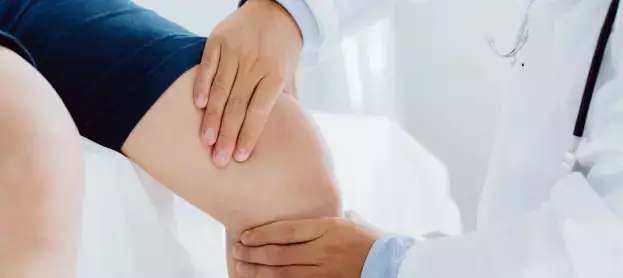
Prof. Dr. Yasser Reda provides specialist assessments for knee osteoarthritis and joint pain, determining an appropriate treatment plan according to the patient's age, the grade of osteoarthritis, examination and imaging findings, and how much pain affects walking and daily movement.
Prof. Dr. Yasser Reda – Treatment of knee osteoarthritis and joint pain
Knee osteoarthritis is one of the most common forms of arthritis, particularly among older adults. When it affects the knee, cartilage wear causes increasing pain and repeated clicking sounds, as well as difficulty moving in some cases and knee deformity or bowing in advanced stages.
Although no treatment fully restores worn cartilage in advanced cases, many treatments help reduce pain, improve movement, and limit progressive joint deterioration, including physiotherapy, weight loss, local injections, and changes to daily activities. In some advanced cases, a surgical procedure such as Knee Replacement Surgery may be the most appropriate solution.
You can also refer to A guide to knee surgery and diagnosing joint problems to learn about common knee problems and the different methods of diagnosis and treatment.
Knee osteoarthritis treatment according to severity
Knee osteoarthritis is not treated in the same way for every patient. The plan varies according to the degree of cartilage wear, pain severity, the patient's age, weight, daily activities, and X-ray findings. The doctor therefore begins with a thorough assessment before deciding on the appropriate treatment.
Treatment of mild knee osteoarthritis
In mild stages, treatment may involve weight loss, reducing pressure on the joint, physiotherapy, muscle-strengthening exercises, and certain medications or painkillers selected by the doctor according to the condition.
Treatment of moderate knee osteoarthritis
In moderate cases, the patient may need a treatment program that includes physiotherapy, braces, local injections into the joint, and changes to daily activities to reduce friction and pain.
Treatment of advanced knee osteoarthritis
In advanced cases that do not respond to non-surgical (conservative) treatment, with severe pain, difficulty walking, or clear wear on X-rays, the doctor may discuss the possibility of surgery or knee replacement with the patient.
What is knee osteoarthritis?
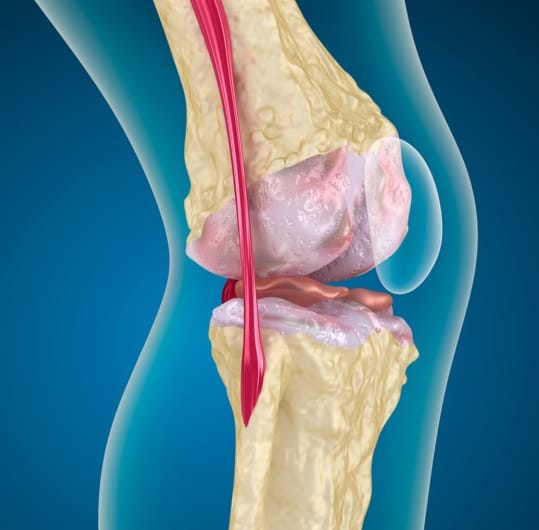
Before discussing the causes of knee osteoarthritis, it is important to understand the nature of osteoarthritis specifically affecting the knee. Knee osteoarthritis is a condition in which the cartilage between the thighbone and shinbone inside the knee joint gradually wears away. Over time, the joint becomes less able to move as easily as before.
After the cartilage between the joints wears away, the bone surfaces become more prone to friction. Changes may then develop within the joint itself, such as bone spurs, which are the body's attempt to cope with cartilage loss but may increase pain and difficulty moving.
Patients experience noticeable pain after sitting for long periods, on waking, or when walking and climbing stairs. The pain may come and go initially, then become more frequent as the condition progresses. Knee osteoarthritis can affect anyone at different ages, but it is most common in older adults and occurs more frequently in women after the age of fifty.
Symptoms of knee osteoarthritis
In the early stages of any disease, symptoms are very mild and unnoticeable, while the opposite is true in advanced stages. Knee osteoarthritis can progress through different grades, each with its own symptoms. The most common symptoms that may worsen over time include:
- Pain in the knee area: One of the first symptoms patients experience is knee pain. It may be mild or moderate initially, then increase with movement, carrying heavy objects, or climbing stairs.
- Knee stiffness: After cartilage wear, joint irritation and swelling may occur, leading to knee stiffness and difficulty moving it normally.
- Clicking sounds: Patients may hear clicking in the knee when moving. This may result from friction inside the joint, particularly if the sound is accompanied by pain.
- Difficulty walking: Patients may feel unable to walk long distances or stand for extended periods.
- Difficulty going up and down stairs: A common symptom is increased pain when using stairs because of the greater pressure on the knee joint.
- Redness and warmth: Some patients may experience redness or warmth around the knee. In this case, they should consult a doctor to check for inflammation or another cause of pain.
- Bowing or a change in knee shape: In some advanced cases, the leg may become bowed or the joint may change shape as a result of cartilage wear.
Causes of knee osteoarthritis
Some people mistakenly believe that knee osteoarthritis occurs only with age. In fact, it can develop for several reasons and at different ages. The most common possible causes of knee osteoarthritis include:
- Advancing age: Age is a major factor in developing knee osteoarthritis, particularly after the age of fifty, as the cartilage gradually weakens and wears away.
- Severe obesity: Excess weight increases the load on the knee joint and may also be associated with increased inflammation affecting the joints and cartilage.
- Strenuous sports activity: Certain sports or forceful movements may cause injuries that affect the knee and increase pressure on the joint.
- Genetic factors: Family history may play a role in increasing the likelihood of knee osteoarthritis.
- Previous knee injuries: Such as ligament sprains, ligament tears, meniscus injuries, or fractures around the knee.
- Autoimmune and inflammatory diseases: Certain conditions, such as rheumatoid arthritis, gout, or some autoimmune diseases, may affect the joints and cause pain and wear.
- Bowed legs or knee malalignment: Uneven pressure on the joint may cause a particular area of cartilage to wear away more quickly.
What is the best treatment for knee osteoarthritis?
Knee osteoarthritis is one of the most troublesome medical problems, preventing smooth movement and causing persistent pain that may worsen over time, leading to joint stiffness and difficulty walking. Neglecting treatment may therefore expose patients to greater risks and make more extensive treatment necessary in the future.
Simply put, knee osteoarthritis means difficulty moving the knee joint smoothly. This difficulty can be mild, moderate, or so severe that normal movements such as walking become difficult. It depends on the extent of cartilage wear and breakdown: the greater the wear, the more negatively it affects the joint, reducing flexibility and increasing pain.
Treatment for knee osteoarthritis may take several approaches, such as:
- Drug treatments: These are used only under a doctor's supervision and are prescribed according to the knee's condition, the patient's age, and any chronic diseases. They may include topical painkillers, certain oral medications, or anti-inflammatory medicines when needed.
- Non-drug treatment: Such as losing excess weight, using compresses, doing suitable exercises, physiotherapy, and avoiding strain on the joint.
- Local injections: Some types of knee injections may help reduce pain and improve movement in certain cases, but they do not permanently cure osteoarthritis.
- Surgery: This is an option in advanced cases that do not respond to other treatments. The decision is made after an examination, imaging, and assessment of the patient's condition.
If you are looking for a specialist assessment of your knee, you can visit our page on the best orthopedic doctor specializing in knees to learn about the importance of an accurate diagnosis and choosing the appropriate treatment.
Non-surgical knee osteoarthritis treatment
Can knee osteoarthritis be treated without surgery? This is one of the questions patients most often ask, particularly when they are concerned about surgical procedures. There are indeed many treatments that help relieve knee osteoarthritis pain without surgery, especially in mild and moderate cases.
However, it is important to know that non-surgical treatment does not fully restore worn cartilage. Instead, it helps reduce pain, improve movement, strengthen muscles, and reduce pressure on the joint, and may slow progression in some patients.
Physiotherapy and exercises to strengthen the knee muscles
Physiotherapy is one of the best ways to treat knee osteoarthritis without surgery. Attending sessions regularly may help noticeably reduce pain, improve flexibility, strengthen the muscles around the joint, and reduce swelling and stiffness.
The most common methods a doctor or physiotherapist may use, depending on the condition, include:
- Exercises to strengthen the muscles around the knee.
- Stretching and flexibility exercises.
- Massage therapy to improve blood flow to the knee.
- Using cold and warm compresses to reduce swelling and pain.
- Hydrotherapy in suitable cases.
- Certain supportive techniques, such as ultrasound or electrical muscle stimulation, when needed.
Medications and painkillers: when are they used?
The treating doctor may prescribe medications or topical or oral painkillers to relieve pain caused by joint friction, particularly when the pain is severe and affects daily life.
However, we emphasize that these medicines must be taken only as prescribed by the doctor and at the specified doses. Excessive use may affect the liver, kidneys, or digestive system, particularly in older adults or people with chronic diseases.
Braces and changes to daily activities
The key to treating knee osteoarthritis may sometimes lie in changing certain daily habits. Patients are therefore advised to follow instructions that reduce pressure on the knee joint:
- Lose excess weight, as every extra kilogram puts additional pressure on the knee.
- Avoid standing for extended periods.
- Avoid carrying heavy objects.
- Use an elevator instead of stairs whenever possible.
- Avoid squatting or sitting cross-legged for long periods.
- Use a crutch when needed to distribute body weight and reduce pressure on the knee.
- Use a suitable knee support or brace if recommended by the doctor.
Knee braces
Wearing a suitable knee brace is one option that may help relieve knee osteoarthritis pain. Some braces help stabilize the joint and reduce pressure on it, and may improve the feeling of stability during movement.
The most common types of braces include:
- Functional knee braces.
- Preventive knee braces.
- Hinged braces.
- Compression knee support.
Using a brace without guidance is not recommended, because the appropriate type varies according to the grade of osteoarthritis, the shape of the knee, and the patient's movement patterns.
Knee injections to treat osteoarthritis
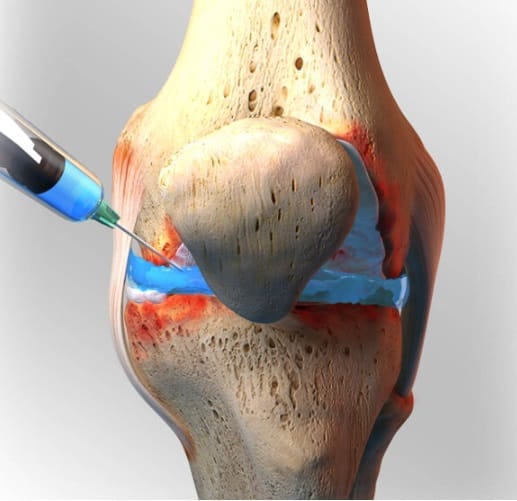
Some cases require knee injections to relieve pain, particularly after initial approaches such as medication, physiotherapy, and changes to daily activities have been tried. The specialist determines the appropriate type of injection after examining the knee and assessing the grade of osteoarthritis.
There are also differences in Types of Knee Joint Injections depending on the patient's condition, the grade of osteoarthritis, and any inflammation inside the joint. The type of injection should therefore not be selected randomly without a medical examination.
The most common types of injections used in some cases of knee osteoarthritis include:
Cortisone injections
They may be used in some cases to reduce inflammation and pain inside the joint, but should only be used repeatedly according to the doctor's instructions.
Hyaluronic acid injections
They help improve movement and reduce friction inside the joint in some cases and are suitable for certain grades of osteoarthritis.
PRP Injections
They may be used in some cases according to the doctor's assessment, the grade of osteoarthritis, and the condition of the joint.
After an injection, the doctor may ask the patient to rest briefly, walk slowly, and avoid strenuous exertion, using compresses if mild swelling appears.
Important: Knee injections may help reduce pain and improve movement, but they are not a definitive cure for osteoarthritis, particularly in grade four cases or severe wear.
When does knee osteoarthritis require surgery?
If the knee does not respond to treatment, pain persists, normal movement is not possible, and imaging shows clear deterioration of the joint, surgery may be an appropriate option after the doctor fully assesses the condition.
The doctor may discuss surgery in the following cases:
- Severe, persistent pain despite physiotherapy, medication, and injections.
- Significant difficulty walking or climbing stairs.
- Severe joint wear visible on X-rays.
- Clear bowing or deformity of the knee.
- Pain affecting sleep and daily life.
- Failure of non-surgical (conservative) treatment over an appropriate period.
In advanced cases, replacing the worn joint with an artificial one may be the appropriate solution to improve movement and reduce pain. Following the doctor's instructions and the rehabilitation program after surgery is essential.
In some cases of severe pain with clear wear on X-rays, you can read the page When do you need knee replacement? to learn about signs that may indicate a need for surgery.
Operations used to treat knee osteoarthritis
In some advanced cases, after non-surgical (conservative) treatment has failed, surgical options may be considered according to the joint's condition and the extent of damage. Among the most important of these options is Knee Replacement Surgery, particularly when cartilage wear is severe and pain affects walking and daily movement.
- Knee replacement: The damaged parts of the joint are replaced with an artificial joint suitable for the condition.
- Partial knee replacement: In some cases where damage is limited to a particular part of the knee.
- Knee osteotomy: This may suit some cases with uneven loading on a particular side of the joint.
- Knee arthroscopy: It is not a solution for every case of osteoarthritis, but may be used in selected cases according to the diagnosis.
After surgery for knee osteoarthritis, it is best to follow the doctor's advice, such as resting, using crutches for a time, and attending physiotherapy sessions. Recovery time may vary from patient to patient according to the type of operation and overall health.
There are also differences in Knee Replacement Surgery Cost according to the type of joint, the patient's condition, the hospital, and the length of stay required. You can also visit our page on the best knee replacement surgeon if the patient is a candidate for joint replacement.
How is knee osteoarthritis diagnosed?
The doctor does not rely solely on symptoms reported by the patient, but also uses a clinical examination and may request imaging or laboratory tests when needed to determine the grade of osteoarthritis and select the appropriate treatment.
- Clinical examination: The doctor examines knee movement, the location of pain, any swelling, stability, and how much osteoarthritis affects walking.
- X-rays: These show the space between the bones and the extent of cartilage wear, helping determine the grade of osteoarthritis.
- Magnetic resonance imaging MRI: The doctor may request this in some cases to assess the cartilage, ligaments, and tissues around the knee.
- Blood tests: These may be requested when autoimmune diseases or inflammation affecting the joint are suspected.
- Joint fluid analysis: This may be performed in some cases with marked swelling or suspected inflammation inside the joint.
Is all knee pain caused by osteoarthritis?
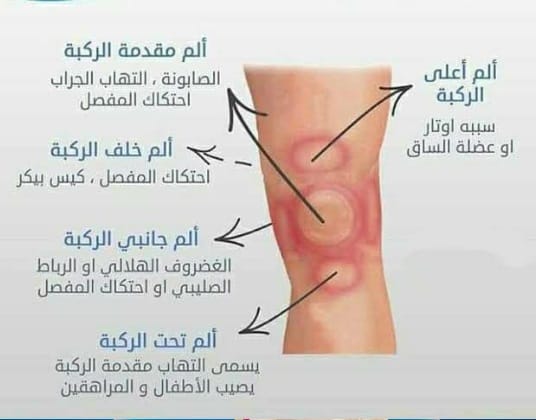
Not all knee pain is caused solely by osteoarthritis. Pain may be related to a ligament injury, the meniscus, tendon inflammation, a sports injury, or another problem inside the joint. Patients therefore need a thorough examination to identify the true cause of pain.
If knee pain is related to a sports injury or joint instability, you may also need to read the page Arthroscopic ACL Surgery, or learn about ACL Reconstruction, because some symptoms of ligament injuries may overlap with osteoarthritis pain in some patients.
Additional help may come from Knee Arthroscopy in diagnosing or treating certain knee problems in cases determined by the doctor. You can also read the page Benefits of knee arthroscopy to learn when arthroscopy may be appropriate.
Why choose Prof. Dr. Yasser Reda for knee osteoarthritis treatment?
Treating knee osteoarthritis requires an accurate diagnosis. The appropriate treatment depends not only on pain, but also on the grade of osteoarthritis, the joint's appearance on X-rays, the patient's weight, daily movement patterns, and how much walking or stair climbing is affected.
Prof. Dr. Yasser Reda provides specialist assessments for knee osteoarthritis, focusing on non-surgical (conservative) treatment when appropriate and using surgery only if the condition requires it after an examination and imaging.
- An accurate assessment of the grade of knee osteoarthritis.
- Treatment tailored to each patient's condition rather than one approach for everyone.
- Attention to physiotherapy, injections, and activity changes when suitable for the condition.
- Experience in knee joint surgery and artificial joint replacement.
- Examinations available at the Heliopolis or Mohandessin clinic.
- Follow-up after treatment or surgery according to the patient's condition.
You can book an examination at the clinic of Prof. Dr. Yasser Reda, orthopedic doctor in Heliopolis, or at his clinic in Mohandessin to assess the degree of osteoarthritis and determine the most suitable treatment.
Related Topics: Knee Osteoarthritis
To learn more about the causes of osteoarthritis and ways to manage it at home and in the clinic:
- Causes and Symptoms of Knee Osteoarthritis: how osteoarthritis develops and its early signs.
- Best Exercises to Strengthen the Knee at Home: simple exercises that reduce stress on the joint.
- Osteoarthritis treatment: treatment options based on the degree of osteoarthritis.
- Knee Osteoarthritis Treatment with Alternative Medicine: what may help and what does not replace treatment.
- The best topical treatment for knee osteoarthritis: available types and tips for use.
- Radiofrequency treatment for the knee: how to ease osteoarthritis pain without surgery.
Frequently asked questions about knee osteoarthritis treatment
What is the best treatment for knee osteoarthritis?
Can knee osteoarthritis be treated without surgery?
When does knee osteoarthritis require joint replacement?
Do knee injections permanently cure osteoarthritis?
Is walking beneficial for knee osteoarthritis?
What are the grades of knee osteoarthritis?
When should you see an orthopedic doctor for knee osteoarthritis treatment?
Book an examination for knee osteoarthritis treatment with Prof. Dr. Yasser Reda
If you have persistent knee pain, difficulty moving, painful clicking, or advanced osteoarthritis affecting walking, you can book an examination and assessment with Prof. Dr. Yasser Reda at the Heliopolis or Mohandessin clinic to determine the most suitable treatment plan for your condition.