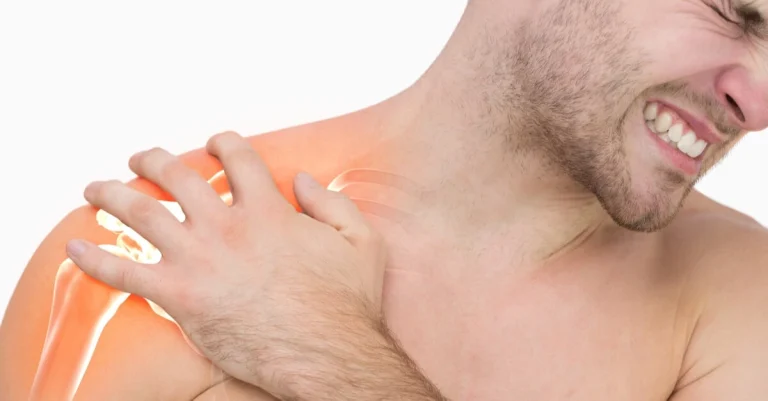

Rotator cuff tear repair is a surgical operation used by doctors in certain severe cases. Today, our website provides all the information about this operation, including its cost, reasons for undergoing it, and what happens before and after surgery.
A Comprehensive Guide to Rotator Cuff Tear Repair
Rotator cuff tear repair is one treatment for a partial shoulder tendon tear. Several treatments may be available without defining the nature of the condition. The doctor may resort to surgery when required. It is one form of treatment for a partial tear and is performed arthroscopically or through traditional methods, both of which are discussed below.
The Main Aim of Rotator Cuff Tear Repair
The main aim of rotator cuff tear repair is to restore normal shoulder movement and reduce the patient's pain. Surgery is used when all other methods fail to reduce this pain.
Arthroscopic Rotator Cuff Tear Repair
Compared with traditional surgery, shoulder arthroscopy offers many advantages. It is a very minimally invasive procedure with low risk, does not require large surgical incisions, and has a short recovery period, allowing the patient to return quickly to daily life after the operation.
Arthroscopy helps provide a clear view of the shoulder and tendons, thereby helping reduce tendon injuries and tears at an early stage. Its role is not limited to the personal aspect; it is also used to manage shoulder tendon and ligament tears.
An arthroscope is a tube fitted with a light or camera lens at its end and connected to a video screen that displays images of the injured shoulder joint. After the person receives local anesthesia, the surgeon makes small holes in the skin no larger than 0.5 cm and inserts the arthroscope through them to remove bone spurs and reattach the tendon to the upper-arm bone.
For rotator cuff tears, the torn tendon is reattached to the end of the humeral head in the arm. The ends of the torn tendon may be stitched together, and the tissues surrounding the tendons are examined for damage to nearby blood vessels or nerves. When a partial tear in the joint tendons is mild, the surgeon may simply smooth and clean the tendon edges.

Traditional Surgery for Rotator Cuff Tear Repair
Traditional surgery is most suitable when the shoulder joint injury is complex and combined with other injuries. An incision several centimetres long is made over the shoulder, after which parts of the muscles around the shoulder are moved or separated to clearly see the damaged tendon.
The torn tendon is then repaired manually after securing the bony end. Depending on the degree and severity of the tendon tear, the joint surgeon may perform tendon debridement alone.
For severe, complete tendon tears known as irreparable tears, treatment is more difficult. A new method has recently emerged involving implantation of a graft taken from another part of the body. The graft does not replace the torn tendon but performs a very similar function, helping reduce symptoms.
After Shoulder Tendon Tear Surgery
In most cases, patients can return home on the same day once the operation is complete and the anesthetic has worn off. If they remain in hospital, it is only a precaution for a specified period to ensure the procedure has no complications.
After surgery, a sling is worn to immobilise the arm for 4 to 6 weeks, and the patient is fully recovered after 12 to 18 months.
Pain and discomfort are normal because they are part of healing. The specialist doctor prescribes medications to relieve pain, such as ibuprofen or other painkillers, as needed.
Recovery may take up to 4 months before the person can carry out daily activities. This period may be longer or shorter depending on the severity of tendon damage and the surgical technique; arthroscopy is associated with a shorter recovery.
The shoulder joint may be immobilised with a splint or brace during healing to help accelerate wound and tendon healing. Physiotherapy and rehabilitation after a shoulder tendon tear certainly play an important role in gradually restoring strength and flexibility.

Risks of Shoulder Tendon Tear Surgery
Every surgical operation has risks, whether minor or major. Shoulder tendon tear surgery usually proceeds without problems or complications, particularly when performed using the latest medical methods. However, medical interventions always carry the possibility of complications, even if rare. The most notable include:
- Bleeding or infection at the surgical incision.
- Scarring in the operated area.
- Hardness or stiffness in the shoulder joint.
- Shoulder pain after surgery.
- Failure of the tendon to heal or a recurrence causing it to tear again.
Cost of Shoulder Tendon Tear Surgery
One of the most frequently asked questions about shoulder tendon tear surgery concerns its cost. The cost varies between doctors and cases because of several factors, most notably:
- The type of shoulder tear.
- The doctor's experience.
- The cost of the patient's hospital stay.
- The level of medical care provided to the patient.
The costs mentioned above apply generally in any country. In Saudi Arabia, surgery costs 5000 US dollars and may reach 8500 dollars, while in Egypt it ranges from 40 to 100 thousand Egyptian pounds.

Non-Surgical Treatment for a Partial Shoulder Tendon Tear
There is another non-surgical treatment for a partial shoulder tendon tear. Not every partial tear requires surgery. 8 out of every 10 people with a partial tear recover without surgery. This may take almost a year but produces good results.
Non-surgical treatment includes physiotherapy and certain exercises, as well as rest for a period so the patient can recover. Some medications are also used to reduce pain and swelling.
Medications used to treat a shoulder tendon tear are based on non-steroidal anti-inflammatory drugs, in addition to steroid injections to reduce swelling and pain.

What is a partial shoulder tendon tear?
The rotator cuff is a group of muscles and tendons that helps a person lift and move the arms away from the body. When it is impaired, the patient sees a doctor to determine the cause and treatment. In some cases, surgery is the solution.
After discussing rotator cuff tear repair, we should explain a partial shoulder tendon tear. This health problem is a tear in the shoulder joint when the tendons tear or move away from the arm bone, causing severe pain and an inability to raise or move the arms easily and smoothly.
Types of Shoulder Tears
In the context of rotator cuff tear repair and non-surgical treatment for a partial shoulder tendon tear, it is important to understand the types of tears that may affect the shoulder:
- Partial tear: In this type, the tendon is torn but remains attached to the arm bone.
- Complete tear: In this type, the tendon separates completely from the arm bone.
Causes of a Partial Tear in the Shoulder Tendon
One of the most important things patients should understand or ask about before undergoing any treatment, surgical or otherwise, is what causes this tear. We explain these causes below:
- A fall that causes a collarbone fracture or shoulder dislocation.
- Tendon wear caused by ageing.
- A forceful impact causing a complete or partial tear.
- Performing a particular exercise without warming up first.
- Reduced blood flow to the shoulder area.
- Injury from strenuous exercise and sudden movements.
- Lifting somewhat heavy objects.
Symptoms of a Shoulder Tendon Tear
Previously, we discussed the causes and types of shoulder tendon tears and treatment methods. We now explain the symptoms that patients notice and that confirm they do indeed have a tendon tear:
- Severe pain in the shoulder joint.
- Shoulder swelling.
- Difficulty moving the shoulder.
- Being unable to raise the arm.
- Hearing a clicking sound when moving the joint.
Risk Factors With a Partial Tear of the Shoulder Tendon
Several factors increase the risk of a partial shoulder tendon tear and make some people more susceptible than others. The most notable are:
- Heavy smoking.
- Being over 40 years old.
- A family history of the same injury.
- Working in strenuous occupations such as carpentry, painting, athletics or mechanics, as well as any occupation requiring heavy objects to be lifted for long periods.
Related Topics: Rotator Cuff Repair
Many questions arise before and after surgery, and these articles answer some of the most important ones:
- When You Need Rotator Cuff Repair: cases in which conservative treatment is not enough.
- Rotator Cuff Tear Treatment: treatment options and key advice.
- Non-Surgical Treatment for a Rotator Cuff Tear: non-surgical options and when they may help.
- The Difference Between Single-Row and Double-Row Techniques: a comparison of two tendon repair techniques.
- Cost of Shoulder Tendon Tear Surgery: factors that determine the cost.
- Complications of Shoulder Tendon Repair Surgery: possible complications and how to reduce them.
- Exercises After Rotator Cuff Repair: rehabilitation exercises at each stage.
- Returning to Work After Rotator Cuff Repair: expected timelines based on the type of work.
- Calcification of the Shoulder Tendons: what it is and how it is treated.
- Best Ointment for Shoulder Tendinitis: types and how to use them.
- best doctor for shoulder tendon treatment: Prof. Dr. Yasser Reda's experience treating rotator cuff injuries.
This brings us to the end of the article, in which we presented all the information about shoulder tendon tear surgery, whether performed surgically through arthroscopy or the traditional method, or treated non-surgically with medications prescribed by the doctor. We also discussed the injury itself, including its causes and risk factors.