Scoliosis can go unnoticed during a child's growth. This common structural disorder may show few signs at first. A child may appear healthy while developing a gradual spinal curve that becomes clear only later or when unusual changes appear in body shape, posture, or gait. Because early diagnosis supports successful treatment, parents should understand the first signs of ”scoliosis”, its causes, and appropriate management.
This article provides a comprehensive view of scoliosis, including its medical definition, possible causes, major early signs in children, modern diagnostic and treatment methods, and the role of parents in observation and support.
What Is Scoliosis? A Simple Medical Definition
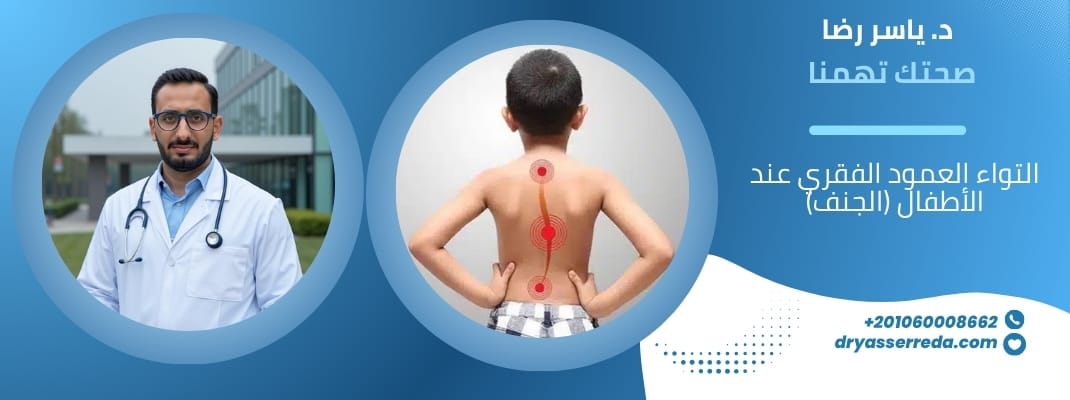
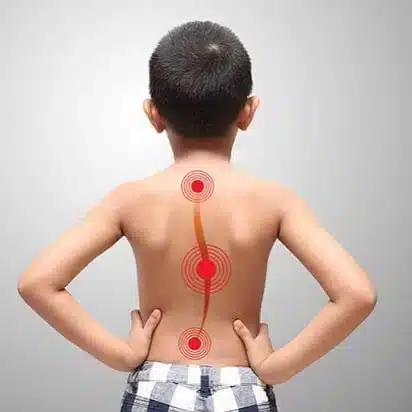
Scoliosis is an abnormal sideways curve of the spine to the right or left, giving the back an “S” or “C” shape instead of a straight alignment. It usually develops during rapid growth, especially in early childhood or early adolescence. The curve may be mild and difficult to notice or more pronounced, changing shoulder or pelvic alignment or gait.
Early Signs of Scoliosis in Children
In its early stages, scoliosis may cause no obvious pain or discomfort and can go unnoticed. Parents should watch for subtle physical and visual signs that may indicate an abnormal spinal curve, including:
- Uneven Shoulders: One shoulder appears higher than the other even when the child stands straight.
- One Shoulder Blade Protrudes: This protrusion is often more noticeable when the child bends forward.
- Noticeable Asymmetry in the Waist or Hips: One side of the waist appears more indented than the other, or the pelvis appears tilted.
- A Difference in Leg Length: This may be noticed through a change in gait or uneven wear on the shoe soles.
- An S- or C-Shaped Curve in the Back: This is especially visible when looking at the child from behind while standing or bending.
- The head tilts to one side instead of remaining centered over the pelvis.
- A change in gait or body balance.
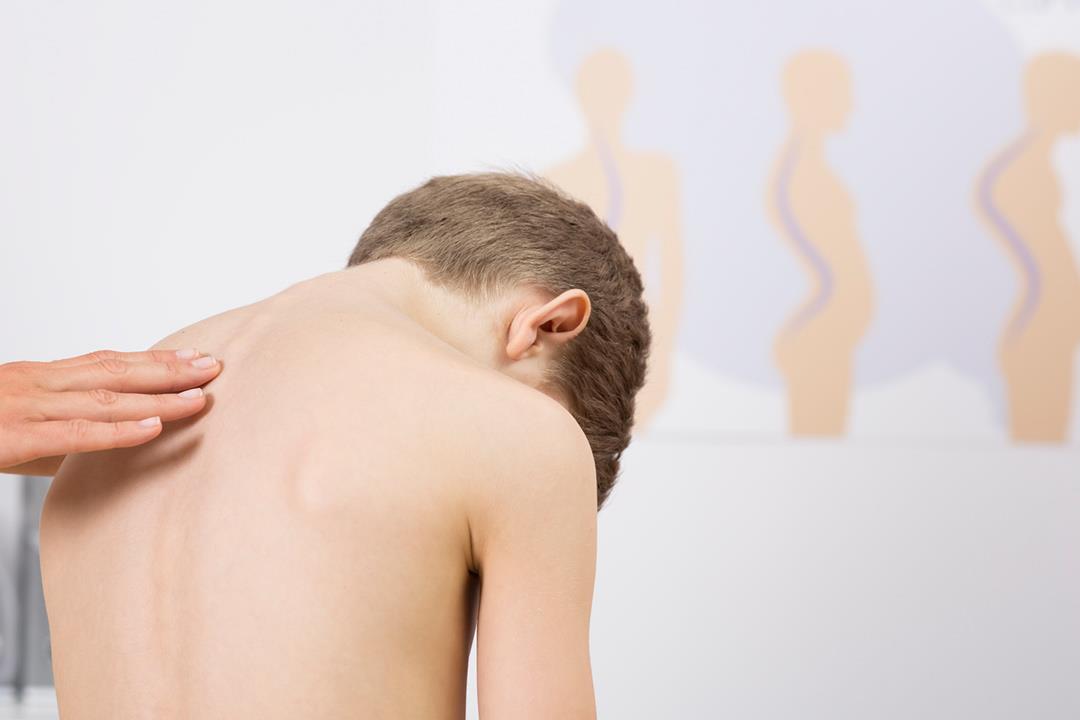
Parents, teachers, or a doctor should notice these changes during a routine examination. The “forward bend” test, in which the child bends forward with the arms hanging down, is one of the simplest ways to detect scoliosis early because it reveals imbalance between the right and left sides of the back.
Early diagnosis of these signs creates more opportunities for nonsurgical treatment and prevents the curve from progressing to more complex stages. Watching for these signs and consulting a doctor promptly helps protect the child's spinal health.
Causes of Scoliosis in Children
Childhood scoliosis has several possible causes that vary according to the type and circumstances. Although many cases are classified as “idiopathic”, meaning that the main cause cannot be identified, modern medicine has identified several possible explanations for this abnormal spinal curve.
1. Idiopathic Scoliosis
This is the most common type among children and accounts for about 80% of scoliosis cases. It has no clear cause but often appears during rapid growth, especially in adolescents. Hereditary factors may play a role because many affected patients have a family history.
2. Congenital Scoliosis
This results from congenital vertebral abnormalities that develop while the fetus is in the womb. Some vertebrae may be incompletely formed or abnormally fused, causing the spine to grow with a noticeable curve. It may not be detected during a child's early years and can accompany heart or kidney abnormalities.
3. Neuromuscular Scoliosis
This occurs in children with conditions affecting nerves or muscles, such as cerebral palsy, spinal muscular atrophy, or spinal cord injuries. The child loses balanced control of the back muscles, causing the spine to tilt to one side.
4. Secondary or Acquired Scoliosis
This may result from spinal injuries or inflammation, tumors that affect skeletal balance, or unequal leg length that causes a compensatory spinal curve.
5. Environmental and Behavioral Factors (Rare)
Although sitting posture or carrying a heavy bag on one shoulder is widely believed to cause scoliosis, scientific evidence has not established a direct relationship. These factors may worsen a curve when structural predisposition or muscle weakness already exists.
6. Genetic factors
Several studies have observed that children with a first-degree relative who has scoliosis face a higher risk, suggesting a possible hereditary genetic link, especially in idiopathic cases.
How Is Scoliosis Diagnosed in Children?
Diagnosing childhood scoliosis combines a careful clinical examination with focused imaging to identify the curve, measure its degree, understand its nature, and develop a treatment plan based on its type and severity.
1. Clinical examination
A clinical examination is the first diagnostic step. The doctor observes the child while standing and sitting and evaluates:
-
Shoulder balance and any difference in height.
-
Spinal alignment and any sideways deviation.
-
The shape and symmetry of the rib cage, pelvis, and waist.
-
A protrusion on one side of the back when the child bends forward.
A simple “forward bend test” is often used. The child bends forward with the arms hanging down while the examiner looks for protrusion on one side of the back, an important early sign of scoliosis.
2. Measuring the Curve Angle (Cobb Angle)
If the doctor suspects scoliosis during the clinical examination, the curve is measured using a simple device called a “scoliometer” or later with X-rays. This measurement is known as the “Cobb angle” and is the main standard for determining scoliosis severity.
3. X-ray
X-rays are the primary and most accurate method for diagnosing scoliosis and determining its type and degree. They show vertebral alignment clearly and help the doctor track progression over time. Images are usually taken while standing to show the spine's natural curve.
4. Magnetic Resonance Imaging (MRI)
MRI is used when a spinal cord abnormality or neurological cause is suspected, especially with congenital or neuromuscular scoliosis. It provides detailed images of the nerves, spinal cord, and vertebrae.
5. Computed Tomography (CT Scan)
CT is used less often and is generally requested when preparing for surgery or evaluating subtle structural abnormalities that do not appear clearly on conventional X-rays.
6. Additional Tests and Examinations
In some cases, blood tests or kidney or heart assessments may be requested, especially when scoliosis is congenital or part of a syndrome involving other organs.
Degrees of Scoliosis and When Is It Serious?
Scoliosis is measured using the “Cobb angle”, which determines the degree of the curve:
- Less Than 10 Degrees: Not Considered a Medical Condition.
- Between 10 and 25 Degrees: The Child Is Monitored Through Observation.
- Between 25 and 45 Degrees: A Brace May Be Needed.
- More Than 45 Degrees: The Condition Often Requires Surgery.
Risk depends on more than the degree of the curve. Continued progression and effects on breathing or the heart also matter, especially when the curve is in the upper spine.
What Treatments Are Available for Childhood Scoliosis?
Treatment Depends Mainly On:
First: Observation and Follow-Up
Mild or nonprogressive cases require regular follow-up with a doctor to monitor the curve.
Second: Braces and Supports
Braces are used for children who are still growing and help prevent progression, although they do not correct the curve. They must be worn for prescribed hours each day and are designed for the child's condition.
Third: Physical Therapy
Physical therapy improves posture and strengthens the back and abdominal muscles, helping reduce pressure on the spine, although it does not directly correct the curve.
Fourth: Surgery
Surgery is performed in severe cases when the curve reaches 45 degrees or more. It aims to correct the curve and stabilize the spine using rods and plates.
How Scoliosis Affects a Child
Advanced scoliosis may affect a child's self-confidence because of changes in body shape or posture. Without appropriate monitoring and treatment, it may also affect breathing or movement. The child should receive calm, supportive care without exaggeration or neglect. Psychological support is as important as medical care, particularly during adolescence.
When Should Parents Visit a Doctor?
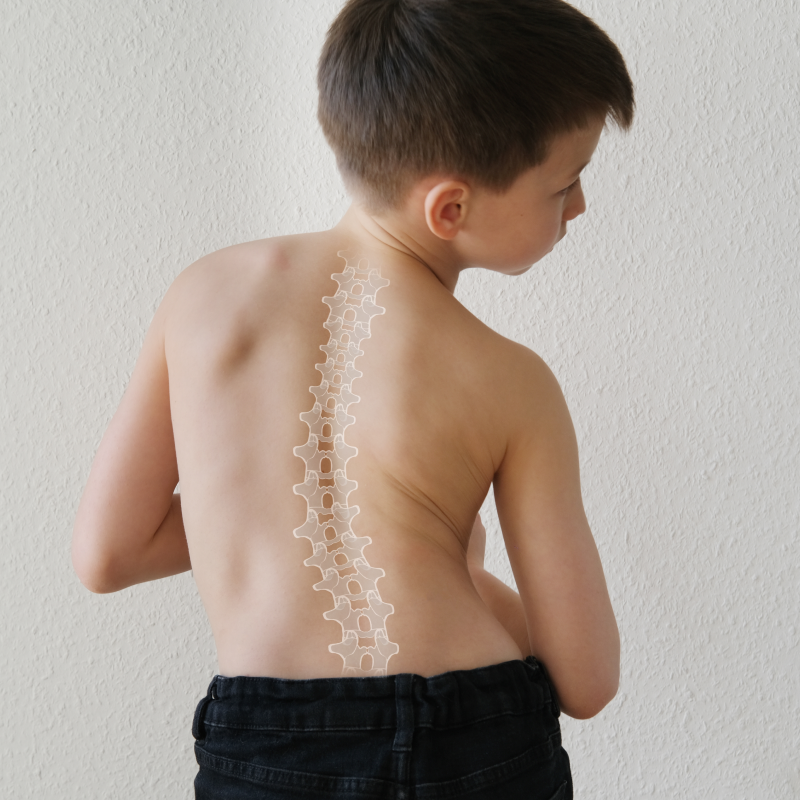
The early signs of scoliosis are not always obvious, so careful observation and a prompt response from parents help protect a child's spinal health. Parents should seek assessment:
- If they notice uneven shoulders or hips.
- When there is an abnormal curve in the back.
- If the child reports repeated back pain or difficulty breathing.
- When there is a family history of scoliosis.
- When the child's gait changes.
In conclusion, Prof. Dr. Yasser Reda, consultant orthopedic surgeon treating spinal deformities in children, stresses regular examinations, especially between 8 and 14 years of age. Early management of scoliosis protects the spine and helps prevent complications affecting breathing, self-confidence, and daily life. The child can be followed up by the best spine doctor if any curvature is noticed.